
TL;DR:
- Fringe film festivals celebrate experimental cinema outside mainstream channels, emphasizing artistic freedom and community-driven venues. They operate on shared-risk models and open or hybrid access, allowing filmmakers to participate without industry gatekeeping. These festivals have grown globally from a 1947 Edinburgh protest, fostering diverse, innovative film experiences worldwide.
A fringe film festival is defined as an independent, open-access or hybrid cinema event that celebrates experimental, boundary-pushing, and emerging film work outside mainstream programming channels. The concept traces directly to the 1947 Edinburgh Festival Fringe, when performers excluded from the official programme staged their own works in unconventional spaces. That founding act of creative defiance shaped an entire global movement. Today, fringe cinema festivals operate across dozens of countries, offering filmmakers and audiences a genuinely alternative space where artistic freedom takes priority over commercial gatekeeping.
What is a fringe film festival and how does it differ from mainstream events?
A fringe film festival operates on a fundamentally different philosophy from a mainstream or programmed cinema event. Where a traditional festival curates its selection, pays artists directly, and controls the programme entirely, a fringe event distributes that responsibility across artists, venues, and producers working together. The shared-risk funding model means no single sponsor carries the financial weight. That structure keeps costs lean and gives artists far greater control over their own work and revenue.

The fringe cinema festival ethos is often captured in a single phrase: “if you want to do it, you can.” That philosophy of artistic freedom is what separates fringe film events from their mainstream counterparts. A filmmaker does not need an agent, a distributor, or an industry connection to participate. The door is open by design.
Fringe festivals also tend to use unconventional venues. Warehouses, community halls, rooftops, and pop-up screens replace multiplex auditoriums. Volunteer staff replace large production teams. The result is a festival atmosphere that feels immediate, personal, and community-driven. For audiences, that intimacy is part of the appeal.
How did fringe film festivals originate and evolve globally?
The fringe movement has a clear and well-documented origin. Its development from a single act of protest to a global network followed several distinct stages:
-
1947, Edinburgh. Eight theatre companies, excluded from the official Edinburgh International Festival, performed uninvited on the city’s margins. That act of creative independence gave the movement its name and its defining spirit.
-
Post-war expansion across the UK. The Edinburgh Festival Fringe grew into the world’s largest arts festival. Its open-access model inspired similar events across Britain, particularly within theatre and performance communities, before cinema adopted the format.
-
Global adoption. By the late twentieth century, fringe-style festivals had spread internationally. Cities across North America, Australia, and Europe developed their own versions, each adapting the model to local culture and resources.
-
Specialist cinema fringe networks. The Méliès International Festivals Federation, a network of niche fringe-style competitive film festivals, now attracts over 800,000 attendees annually across 21 countries. That scale demonstrates how fringe cinema has moved from the margins to a recognised force in global film culture.
-
Format diversification. Festivals moved beyond purely open-access models. Lottery systems, curated selections, and hybrid approaches emerged to address equity and quality concerns while preserving the fringe spirit.
The rise of independent film festivals in the UK reflects this global pattern. Grassroots events in overlooked communities have grown in number and ambition, creating new audiences for independent cinema far beyond London.
What are the key characteristics of fringe festival models?
Fringe festivals are not a single, uniform format. Many fringe festivals use a range of models, and understanding those differences helps both filmmakers and audiences make informed choices about where to submit or attend.
The four main organisational models
- Open access. Any filmmaker who pays the participation fee can screen their work. No selection panel, no rejection. This is the purest expression of the fringe ethos.
- Lottery. Submissions enter a random draw. This removes bias from selection but introduces chance, which some filmmakers find frustrating.
- Curated. A programming team selects works based on quality, theme, or diversity criteria. This model challenges the assumption that all fringe events are fully open access.
- Hybrid. A combination of open access and curation, often used to promote equity and ensure diverse representation across the programme.
How fringe festivals compare to mainstream festivals
| Feature | Fringe festival | Mainstream/programmed festival |
|---|---|---|
| Selection process | Open, lottery, or hybrid | Fully curated by programmers |
| Artist payment | Shared risk; artists retain revenue | Festival pays artists directly |
| Venue type | Unconventional, community spaces | Dedicated cinema or theatre |
| Staff model | Volunteer-led, minimal paid staff | Professional production teams |
| Artistic control | Retained by the filmmaker | Shared with or ceded to festival |
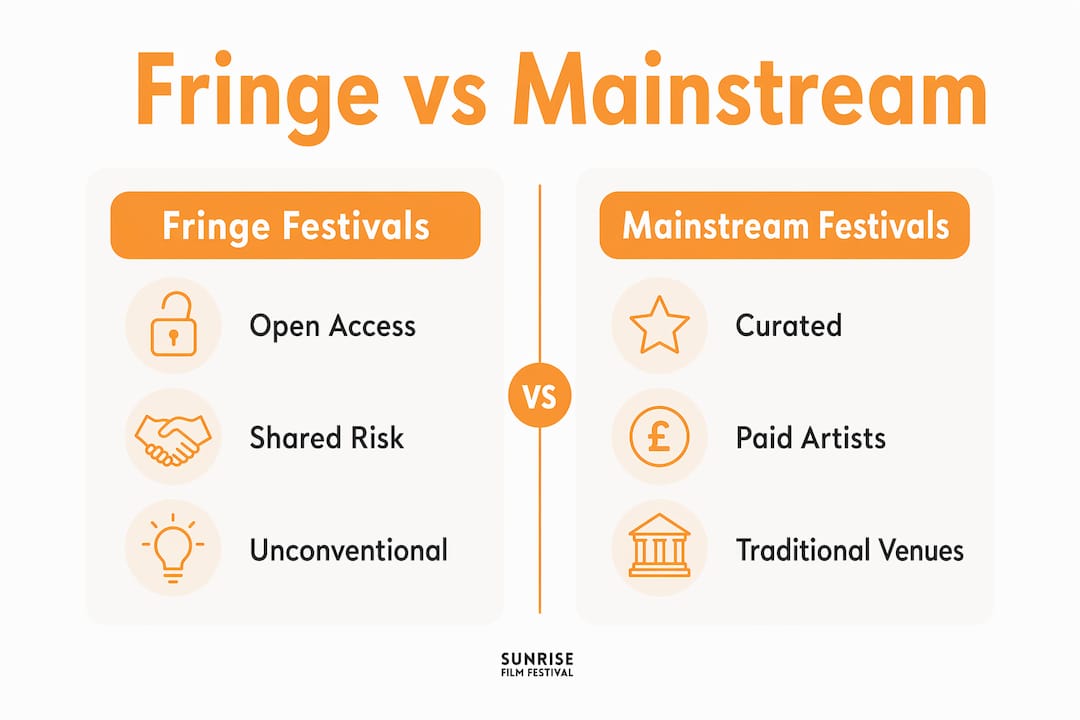
The shared-risk model is the structural detail that most distinguishes fringe from mainstream events. Artists, venues, and producers each absorb a portion of the financial risk. That arrangement keeps the festival agile and the programming diverse.
Pro Tip: If you are submitting to a fringe cinema festival for the first time, check whether it operates an open-access, curated, or hybrid model before you apply. Each model has different expectations around production quality, running time, and genre.
What cultural and artistic impact do fringe film festivals have?
Fringe cinema festivals have a measurable and growing cultural impact. The Women’s Film Festival in Philadelphia, a fringe-aligned event, grew from 25 films over 3 days to 100 films over 10 days by 2025, receiving over 300 submissions from around the world. That growth shows how fringe film events can scale without losing their community focus.
“Integration of immersive technologies at fringe festivals redefines cinema engagement, merging intimacy and collective experiences.” — Producer Briege Whitehead on VR cinema at Adelaide Fringe
Technology is reshaping what fringe cinema looks and feels like. Adelaide Fringe introduced shared-sync virtual reality cinema, allowing audiences to experience immersive film together in a live festival setting. That kind of experimentation is only possible in a fringe context, where the absence of commercial pressure creates space for genuine creative risk.
Cultural impact at a glance
| Impact area | Example |
|---|---|
| Attendance and reach | Méliès International Festivals Federation: 800,000+ attendees across 21 countries |
| Programme growth | Philadelphia Women’s Film Festival: 25 to 100 films in under a decade |
| Technology integration | Adelaide Fringe VR cinema: shared-sync immersive experience |
| Community development | Grassroots festivals in underserved UK communities |
Fringe festivals also provide distinct career pathways for filmmakers who sit outside mainstream routes. The benefits of attending film festivals extend well beyond a single screening. Networking with other filmmakers, connecting with funders, and building an audience are all outcomes that a fringe festival actively supports. Fringe events are marketplaces as much as they are showcases.
Diversity is another defining feature of the fringe cinema sector. Works that challenge conventional narrative structures, represent underrepresented communities, or experiment with form find a natural home in fringe programming. That openness is not incidental. It is structural, built into the access model from the start.
How can filmmakers and audiences participate in fringe film events?
Participation in a fringe cinema festival is more accessible than most filmmakers assume. The process varies by model, but the general pathway follows a clear sequence:
- Research the festival’s model. Confirm whether the event is open access, curated, or hybrid. Each model has a different submission process and set of expectations.
- Prepare your submission materials. Most fringe festivals require a screener file, a synopsis, a director’s statement, and basic technical specifications. Keep your materials concise and professionally presented.
- Submit through the festival’s platform. Many fringe film events use platforms such as FilmFreeway or their own submission portals. Check film submission deadlines carefully, as fringe festivals often have rolling or short-window calls.
- Adapt your work if needed. Success at fringe festivals often depends on adaptability, as works may be modified between venues or during a festival run. Be prepared to adjust running times or technical formats.
- Attend and network actively. Fringe festivals serve as dynamic marketplaces beyond mere exhibition spaces. Introduce yourself to other filmmakers, attend Q&A sessions, and engage with audiences directly after screenings.
Pro Tip: Bring printed one-sheets or a digital portfolio to fringe film events. Programmers, distributors, and fellow filmmakers often make connections informally between screenings, and having something tangible to share makes those conversations far more productive.
For audiences, attending a fringe cinema festival requires a slightly different mindset than visiting a multiplex. Programmes are often dense, venues may be spread across a town or city, and scheduling can shift. Arrive early, read the full programme in advance, and treat the experience as an exploration rather than a single event. The festival schedule at any well-run fringe event will give you a clear map of what is on and where.
Fringe film events also welcome audiences who are new to independent cinema. The informal atmosphere, accessible ticketing, and diverse programming make them an ideal entry point for anyone curious about film beyond the mainstream.
Key takeaways
Fringe film festivals are defined by open or hybrid access, shared-risk funding, and a commitment to artistic freedom that mainstream cinema events cannot replicate.
| Point | Details |
|---|---|
| Fringe festival definition | An independent event using open-access, lottery, curated, or hybrid models outside mainstream programming. |
| Historical origin | The movement began in 1947 Edinburgh when excluded performers staged their own works independently. |
| Shared-risk funding | Artists, venues, and producers share financial risk, keeping costs low and artistic control with filmmakers. |
| Cultural reach | The Méliès International Festivals Federation draws over 800,000 attendees annually across 21 countries. |
| Filmmaker participation | Adaptability and active networking are as important as the quality of the film itself at fringe events. |
Sunrise Film Festival’s perspective on the fringe ethos
The fringe model resonates deeply with what Sunrise Film Festival has been building in Suffolk since 2021. Running a festival in one of the most deprived communities in England teaches you something quickly: the gatekeeping that defines mainstream cinema is not a quality filter. It is a structural barrier. The filmmakers whose work we have screened and awarded over the years would not have reached those audiences through a traditional route. The fringe ethos made it possible.
What strikes us most about the evolution of fringe cinema is how technology is expanding what “access” actually means. VR cinema, hybrid online-physical screenings, and community pop-ups are not gimmicks. They are genuine tools for reaching audiences who have been overlooked by the industry for decades. Sunrise Film Festival has seen that directly in East Anglia, where bringing film to communities that rarely see themselves reflected on screen creates a response that no multiplex could replicate.
The challenge for fringe festivals going forward is sustaining that accessibility as costs rise and audiences fragment across platforms. The shared-risk model is resilient, but it requires genuine commitment from venues, funders, and filmmakers alike. Emerging filmmakers should not wait for permission to participate. The fringe exists precisely because someone decided not to wait.
— Sunrise Film Festival
Sunrise Film Festival: independent cinema in Suffolk
Sunrise Film Festival is Suffolk’s biggest film festival, and it operates with the same values that define the best fringe cinema events: accessibility, creativity, and a genuine commitment to stories that deserve to be seen.
Since 2021, Sunrise Film Festival has showcased independent films to audiences across East Anglia, including communities that rarely feature on the cultural map. The festival is a BIFA-qualifying event, which means films screened here carry real industry recognition. Whether you are a filmmaker looking to reach a new audience or a film enthusiast ready to experience independent cinema at its most alive, the festival programme is the place to start. View the full schedule and find out how to get involved with one of the UK’s most distinctive independent film festivals.
FAQ
What is the fringe film festival definition in simple terms?
A fringe film festival is an independent cinema event that screens experimental, emerging, or boundary-pushing films outside mainstream programming, often using open-access or hybrid selection models.
How do fringe film festivals differ from mainstream film festivals?
Mainstream festivals curate their programmes and pay artists directly, while fringe festivals use a shared-risk model where artists, venues, and producers each carry part of the financial responsibility.
Are all fringe festivals open access?
No. Many fringe festivals use curated or hybrid models to promote diversity and equity, challenging the common assumption that all fringe events accept every submission.
How do I submit a film to a fringe cinema festival?
Research the festival’s selection model, prepare a screener and supporting materials, and submit through the festival’s official platform, paying close attention to deadlines and technical requirements.
What should I expect at a fringe film event as an audience member?
Expect a dense, varied programme across multiple venues, an informal atmosphere, and the opportunity to engage directly with filmmakers, often in Q&A sessions or post-screening discussions.