

A film programme is a curated selection and organised schedule of films and events designed to create a cohesive audience experience, whether at a festival, cinema, or community screening. The term covers far more than a simple movie schedule. At its most purposeful, a film programme functions as a curated narrative, shaping how audiences discover, feel, and connect with stories. Sunrisefilmfestival, Suffolk’s biggest independent festival, builds its entire identity around this principle: that thoughtful film programming can bring cinema to communities that are too often overlooked by mainstream distribution.
What is a film programme and why does it matter?
A film programme is defined as a curated selection of films and events organised to create a themed or emotional narrative for audiences. This is the standard industry definition used by festival directors, cinema programmers, and cultural organisations across the UK. The word “programme” signals intent: someone has made deliberate choices about which films appear, in what order, and alongside what other events.
The distinction between a programme and a simple screening list is significant. A screening list tells you what is showing and when. A programme tells you a story about why those films belong together. Think of the difference between a playlist shuffled at random and one assembled by someone who knows exactly what emotional arc they want to take you through.

At festivals like the San Francisco International Film Festival, programming teams spend months reviewing submissions before assembling a final selection. The goal is not to show the most films, but to show the right films in the right sequence. For audiences, this means every screening feels purposeful. For filmmakers, it means their work is placed in a context that amplifies its meaning.
What roles and goals do film programmes serve?
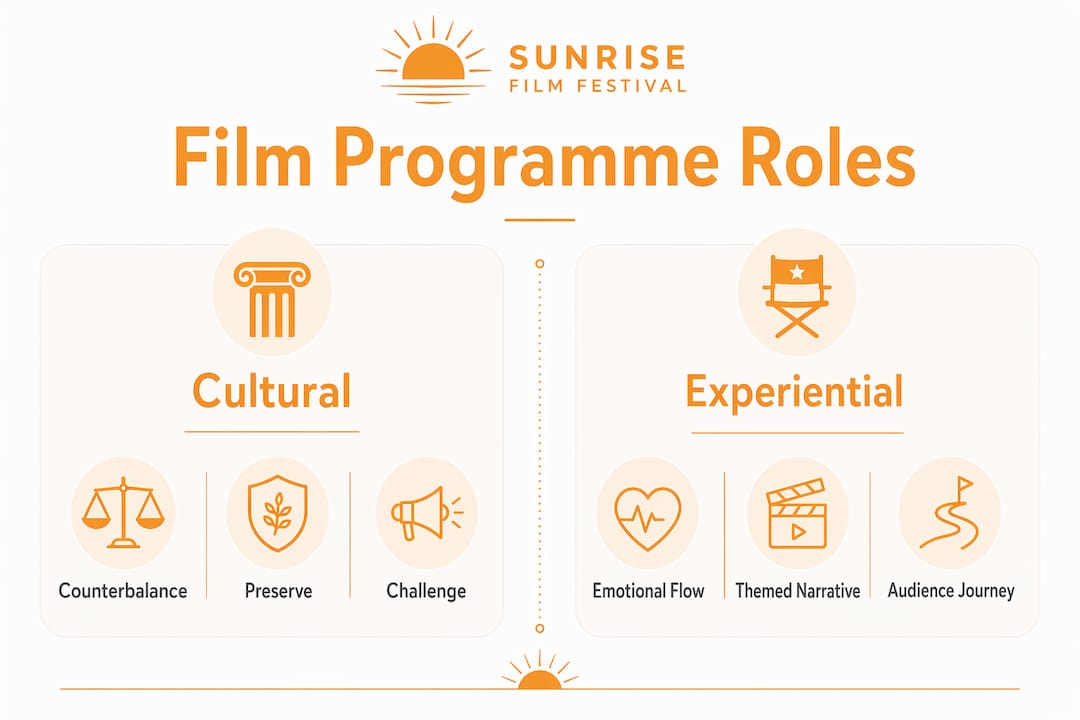
Film programmes serve two interconnected purposes: cultural and experiential. Culturally, they act as a counterweight to algorithmic recommendation systems. Streaming platforms surface content based on viewing history, which tends to reinforce existing tastes. Programming brings challenging films to audiences that algorithms typically omit, giving experimental, documentary, and independent work a genuine platform.
Experientially, a well-built programme shapes the emotional journey of an audience across an entire festival or screening event. Programmers see festivals not merely as exhibitions but as curated playlists where the order of films creates specific emotional trajectories. A short comedy before a heavy documentary is not accidental. It is a deliberate act of audience care.
The commercial impact of strong programming is measurable. Programmes like the Doc Stories strand have sold out at 90-plus percent capacity, demonstrating that audiences respond to curation with their feet and their wallets. That figure matters because it proves programming is not just an artistic exercise. It is a driver of attendance and community engagement.
“Programming is about asking what kind of festival or screening experience the organisers want to build that year, shaping a narrative or vibe.” — Raindance Film Festival
Film programmes also serve filmmakers directly. Being selected for a curated programme places a film in dialogue with other works, lending it credibility and context. For independent and short film makers, this kind of placement can open doors to distribution, awards, and wider audiences. The rise of independent festivals across the UK has multiplied these opportunities significantly.
How does a festival programme differ from a production schedule?
This is one of the most common points of confusion for students and aspiring filmmakers, and it is worth addressing directly. A festival programme and a production shooting schedule are entirely different documents serving entirely different purposes.
A festival programme is an audience-facing document. It lists the films being shown, their screening times, venue locations, and supporting events such as Q&A sessions or workshops. Its purpose is to guide the audience experience and communicate the curatorial vision of the festival.
A shooting schedule, by contrast, is an internal production document. It organises daily production logistics by location, cast availability, and lighting requirements rather than by story chronology. A scene that appears first in a finished film might be shot last because it requires an expensive location or a specific weather condition. The schedule exists to make the production financially viable and logistically manageable.
| Feature | Festival programme | Production shooting schedule |
|---|---|---|
| Audience | Public, cinema-goers | Cast, crew, production team |
| Purpose | Curate and communicate film selection | Organise daily shoot logistics |
| Structure | Ordered by screening time and theme | Ordered by location, cast, and lighting needs |
| Key tool | Programme guide or brochure | Stripboard or scheduling software |
| Flexibility | Fixed once published | Adaptive, with built-in buffers |
Production teams use stripboards, which are visual planning tools that break each scene into a strip of data including cast requirements, location, and estimated shoot time. The shooting schedule acts as a long-term roadmap for the entire production, while the call sheet is the tactical daily plan derived from it. Call sheets include precise times, locations, and instructions for each working day.
Experienced filmmakers recommend building buffers of 10 to 20 percent into production schedules to absorb delays. This practical discipline has no equivalent in festival programming, where the published schedule is fixed and audiences have bought tickets in advance.
Pro Tip: If you are a student filmmaker, keep these two documents mentally separate from the start. Your festival submission requires a finished film and a synopsis. Your production requires a shooting schedule. Conflating the two leads to planning errors on both fronts.
What are the key approaches to creating a film programme?
Creating a film programme is part logistics, part storytelling, and part audience psychology. The process typically follows a clear sequence, though the creative decisions within each step require genuine expertise.
-
Define the curatorial vision. Before selecting a single film, programmers decide what kind of experience they want to build. Is this a celebration of local voices? A challenge to mainstream narratives? A genre showcase? This vision shapes every subsequent decision.
-
Review submissions and build a longlist. Festivals receive hundreds or thousands of submissions. Programmers watch, assess, and score films against the curatorial vision, genre balance, and technical quality. The longlist is typically three to four times larger than the final selection.
-
Apply thematic and emotional sequencing. Mixing genres and types within one programme broadens audiences beyond niche silos. A documentary about climate grief placed alongside a short comedy about community gardening creates a richer emotional experience than either film would achieve alone.
-
Consider logistics and venue capacity. The most artistically perfect programme fails if it ignores practical constraints. Screening times must account for film length, audience travel between venues, and the capacity of each space. A sold-out 80-seat screening is more powerful than a half-empty 300-seat auditorium.
-
Build in supporting events. Q&A sessions, filmmaker introductions, and panel discussions transform a screening list into a full programme. These elements create community, deepen engagement, and give audiences a reason to attend in person rather than wait for a streaming release.
Pro Tip: When building a programme for a school or community screening event, treat the running order like a music setlist. Open with something accessible and energetic, place your most challenging or emotional film in the middle, and close with something that sends the audience home feeling connected.
Effective programming avoids strict category silos, choosing instead to surprise and broaden audience tastes by mixing genres. This is the difference between a competent programme and a memorable one.
How can aspiring filmmakers and enthusiasts engage with film programmes?
Understanding film programmes is one thing. Actively engaging with them is where real learning happens. There are several concrete ways to get involved, whether you are a student, a filmmaker, or simply a passionate cinema-goer.
-
Attend festivals with a programme in hand. Read the programme notes before each screening. Programmers write these notes to contextualise the film and signal its place within the wider selection. Reading them transforms passive viewing into active engagement with the curatorial vision.
-
Submit your work to festivals. If you are making films, submitting to curated festivals is the most direct way to engage with programming. Sunrisefilmfestival welcomes submissions from filmmakers across East Anglia and beyond. Understanding why to submit your short film to a festival like this one starts with understanding what programmers are looking for: originality, craft, and a clear point of view.
-
Study existing programmes as documents. Festival programmes from events like the BFI London Film Festival or Sundance are publicly available. Reading them critically, noting which films are grouped together and in what order, teaches you more about curation than most textbooks.
-
Volunteer or intern with a festival. Many independent festivals, including grassroots events across Suffolk and East Anglia, rely on volunteers. Working alongside a programming team gives you direct insight into the selection process.
-
Build your own screening programme. A film club, a school event, or a community screening is a genuine programming exercise. Choose a theme, select three to five films, write short notes for each, and consider the running order carefully. The act of doing this once teaches you more about the craft than reading about it ever will.
Aspiring programmers can also explore resources from organisations like the British Film Institute, which offers training and development opportunities specifically for emerging programmers working outside London.
Key takeaways
A film programme is a curated, sequenced selection of films and events built to shape audience experience, and it is entirely distinct from a production shooting schedule, which organises the logistics of making a film.
| Point | Details |
|---|---|
| Definition of a film programme | A curated selection of films and events organised to create a themed or emotional audience experience. |
| Programming versus scheduling | A festival programme is audience-facing; a shooting schedule is an internal production logistics document. |
| Cultural purpose | Programming surfaces challenging and independent films that algorithmic platforms routinely overlook. |
| Creating a programme | Effective curation combines thematic vision, genre variety, logistical planning, and supporting events. |
| Engagement opportunities | Filmmakers and enthusiasts can engage by attending, submitting work, volunteering, or building their own screening programmes. |
Why programming is the most underrated skill in film
Most conversations about film focus on directing, writing, or performance. Programming rarely gets the same attention, and that is a genuine blind spot. After years of watching how audiences respond to curated selections, I am convinced that the order in which films are shown shapes the audience’s experience of each individual film as much as the film itself does.
A short film that might feel slight on its own becomes resonant when placed after something heavy. A documentary that could feel overwhelming lands differently when the audience has been warmed up by something playful. This is not manipulation. It is hospitality. The programmer is, in effect, hosting a conversation between films and between the films and the audience.
For students and aspiring filmmakers, I would argue that learning to think like a programmer makes you a better filmmaker. It forces you to consider how your work sits in relation to other work, how it will be received in a specific context, and what emotional state your audience will be in when they watch it. These are questions that the best directors ask themselves constantly.
The grassroots festivals doing this work in overlooked communities, places like Lowestoft where Sunrisefilmfestival operates, are not just showing films. They are making an argument about which stories matter and who deserves to see them. That is a creative act with real cultural weight.
— Comms
Discover Sunrisefilmfestival’s curated programme

Sunrisefilmfestival is Suffolk’s biggest film festival and a BIFA qualifying festival, bringing carefully curated independent cinema to one of England’s most underserved communities. The festival’s programme is built on exactly the principles explored in this article: thematic vision, genre variety, and a genuine commitment to platforming stories that deserve a wider audience. Whether you want to attend a screening, submit your short film, or simply explore what a grassroots festival programme looks like in practice, Sunrisefilmfestival is the place to start. Check the official selection and see what curated independent cinema looks like when it is made with real community purpose.
FAQ
What is a film programme in simple terms?
A film programme is a curated selection of films and events organised into a schedule, designed to create a specific audience experience at a festival, cinema, or community screening.
How does a film festival programme differ from a movie schedule?
A festival programme reflects deliberate curatorial choices about which films appear together and in what order. A movie schedule is simply a timetable of what is showing and when, without the same thematic or narrative intent.
What does a film programmer actually do?
A film programmer reviews submissions, selects films that fit a curatorial vision, sequences them to create an emotional arc, and builds supporting events such as Q&As to deepen audience engagement.
Can I create my own film programme?
Yes. Choose a theme, select three to five films, write short contextual notes for each, and consider the running order carefully. Even a small school or community screening benefits from this kind of intentional curation.
How do I submit my film to a festival programme?
Most festivals accept submissions through platforms like FilmFreeway or directly via their own websites. Sunrisefilmfestival accepts submissions from independent filmmakers and provides clear guidance on what programmers are looking for in a submission.