

TL;DR:
- Independent films succeed at awards by combining authentic, high-stakes storytelling with broad technical excellence across multiple categories. Grassroots audience engagement and festival recognition also play crucial roles in building momentum and industry credibility.
Independent films win awards because they combine authentic, high-stakes storytelling with broad technical craftsmanship that resonates with critics and award voters far more than budget alone ever could. Understanding why indie films win awards reveals a clear pattern: films that take genuine narrative risks, earn nominations across multiple categories, and build passionate grassroots audiences consistently outperform expectations at ceremonies from the Oscars to the Spirit Awards. For budding filmmakers and film enthusiasts alike, these patterns are not accidental. They reflect deliberate creative and strategic choices that any filmmaker can learn from, and that festivals like Sunrise Film Festival actively champion.
Why indie films win awards: the role of narrative risk
Indie films build their award-winning power on stories with irreversible, high-stakes consequences. When a character’s choices cannot be undone, the emotional weight of every scene increases. Actors and writers are forced to deliver performances grounded in genuine psychological tension rather than spectacle.
This is the structural difference between independent cinema and most big-budget productions. Mainstream blockbusters frequently rely on reversible consequences: the hero survives, the world is saved, the status quo is restored. Indie films refuse that comfort. A character’s moral compromise, grief, or failure stays on screen and stays with the audience long after the credits roll.
The narrative risks indie filmmakers take also extend to subject matter. Stories about addiction, grief, identity, and social exclusion are rarely the territory of studio productions with shareholders to satisfy. Independent cinema occupies that space with confidence, which is precisely why indie films are celebrated by critics who see them as a societal mirror that mainstream cinema too often avoids.
- Permanent character consequences raise the emotional stakes of every scene.
- Moral ambiguity creates complex performances that award voters recognise.
- Socially resonant subject matter connects with critics seeking cultural relevance.
- Psychological tension drives screenplay and acting nominations simultaneously.
Pro Tip: When evaluating an indie film’s awards potential, ask whether the central character’s situation is genuinely irreversible by the final act. If the answer is yes, the film has the structural foundation for award-worthy performances.
The power of authentic framing in storytelling is well documented in film analysis. Indie filmmakers who commit to that authenticity from the first draft give themselves a significant advantage when awards season arrives.
Does technical excellence matter as much as story?
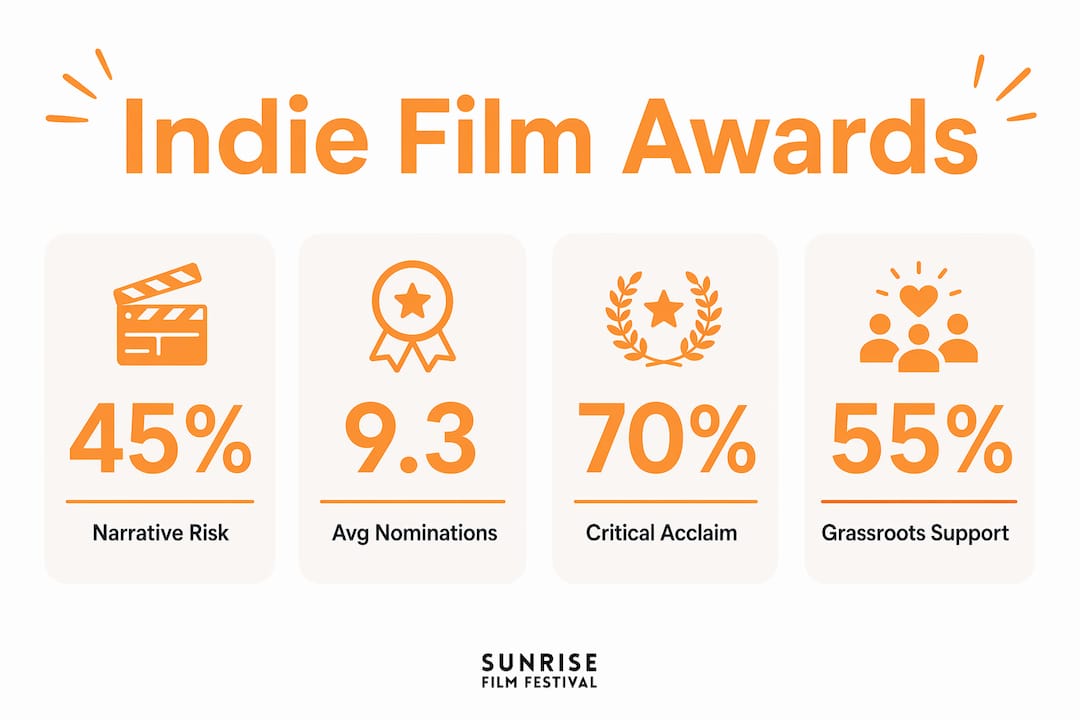
Strong storytelling alone does not win Best Picture. Best Picture winners average 9.3 nominations across categories, and films with five or fewer nominations rarely win. That figure tells you something critical: award voters respond to films that demonstrate excellence across the entire production, not just in one area.

For indie films, this creates both a challenge and an opportunity. Budget constraints force creative solutions in cinematography, production design, and sound. Those solutions, when executed well, often produce more distinctive work than expensive studio productions with unlimited resources. Constraint breeds ingenuity, and ingenuity earns nominations.
The categories that matter most are consistent. Best Picture winners typically claim screenplay and directing awards alongside acting recognition. An indie film that earns nominations in writing, direction, and performance simultaneously signals to voters that its quality is comprehensive rather than isolated.
| Nomination count | Best Picture win probability |
|---|---|
| 10 or more | High |
| 7–9 | Moderate |
| 5–6 | Low |
| Fewer than 5 | Rare |
Critical acclaim reinforces technical recognition. A film that earns strong reviews from critics at major publications builds the cultural credibility that translates into nomination momentum. For independent films, early festival screenings are often where that critical conversation begins, which is why award-winning short films frequently share the same technical discipline as their feature-length counterparts.
Pro Tip: If you are campaigning for an indie film at awards season, do not focus solely on the acting or story. Submit to craft categories including editing, original score, and cinematography. Broad nomination presence is the single strongest predictor of a win.
How does grassroots engagement drive awards success?
Indie films build specific, passionate audiences who act as organic advocates. This is not accidental. Grassroots audience ownership creates a form of personal promotion that no studio marketing budget can replicate, because it is driven by genuine emotional connection rather than paid reach.
The success of indie films in awards circuits is closely tied to their ability to generate word-of-mouth momentum before a single advertisement runs. A filmmaker who builds a community around their project, whether through social media, Q&A screenings, or direct outreach to critics, creates the kind of sustained visibility that keeps a film in the conversation throughout a long awards season.
Festivals play a central role in this process. Winning or being selected at a recognised festival provides legitimacy that opens doors to distributors, critics, and award committees. Awards like the Goya significantly extend an indie film’s commercial life and streaming visibility beyond its theatrical run. That extended reach compounds the grassroots momentum already in motion.
Key grassroots engagement tactics that support awards success include:
- Screening at regional and national film festivals to build critical credibility.
- Hosting post-screening Q&A sessions to deepen audience connection.
- Engaging directly with film critics and bloggers before wide release.
- Building a social media presence around the film’s themes, not just its release.
- Submitting to BIFA-qualifying festivals to gain industry recognition early.
Sunrise Film Festival exemplifies this grassroots model. As Suffolk’s largest film festival and a BIFA-qualifying event, it provides emerging filmmakers with the visibility and legitimacy that feeds directly into the awards ecosystem. The benefits of attending film festivals for independent filmmakers extend well beyond a single screening night.
How is the awards landscape changing for independent films?
Awards circuits have decentralised significantly. Awards still confer prestige but are no longer the sole mechanism through which indie films find audiences or build reputations. Streaming platforms, social media, and direct-to-audience distribution have created parallel systems of visibility that operate alongside traditional awards bodies.
This shift changes what it means for an indie film to succeed. A film can build a substantial cultural footprint through streaming and online conversation without a single major nomination. That does not diminish the value of awards. It means that awards now function as one powerful signal among several, rather than the only signal that matters.
The Spirit Awards illustrate this evolution clearly. Budget caps and category expansions at indie-specific awards shape eligibility and reflect the ongoing negotiation between commercial success and independent spirit. As more films with significant streaming backing enter the indie conversation, award bodies adapt their criteria to maintain relevance.
For filmmakers, the practical implication is clear. Building visibility through festivals, streaming, and direct audience engagement is now as important as campaigning for nominations. The rise of independent film festivals across the UK reflects this decentralisation, with regional events providing genuine discovery opportunities that sit alongside the major ceremonies. Films that find a second life online after their festival run often sustain the cultural conversation that keeps them in awards consideration far longer than a traditional theatrical release would allow.
Key takeaways
Indie films win awards by combining authentic narrative risk with broad technical excellence and sustained grassroots audience engagement across festivals and platforms.
| Point | Details |
|---|---|
| Narrative risk is foundational | Stories with irreversible consequences produce stronger performances and deeper critical resonance. |
| Broad nominations predict wins | Best Picture winners average 9.3 nominations; submit to craft categories, not just acting. |
| Grassroots engagement amplifies visibility | Personal audience connection and festival selection create organic momentum no budget can buy. |
| Awards are one signal among many | Streaming and social media now share influence with traditional award bodies in indie film success. |
| Festivals provide critical legitimacy | BIFA-qualifying events like Sunrise Film Festival open doors to distributors and award committees. |
What Sunrise Film Festival has learned about indie awards success
At Sunrise Film Festival, we have watched emerging filmmakers arrive with stories that carry genuine weight, and we have seen what separates the films that go on to earn wider recognition from those that do not. The answer is almost never budget. It is almost always courage.
The filmmakers whose work resonates most deeply are those who commit fully to the consequences of their stories. They do not soften the ending to make it more palatable. They do not replace a difficult truth with a comfortable resolution. That commitment shows on screen, and award voters feel it.
We also believe the grassroots model is not just a workaround for limited resources. It is a genuine advantage. A filmmaker who has built a real relationship with their audience before a festival submission arrives with something a studio campaign cannot manufacture: authenticity. That authenticity carries through every stage of the awards process.
Our advice to any budding filmmaker is to treat your festival submissions as the beginning of a conversation, not the end of a campaign. Engage with audiences, respond to critics, and keep your film in the cultural conversation. The films we have celebrated at Sunrise Film Festival that went on to earn broader recognition all shared that quality. They stayed present, stayed honest, and let the work speak.
— Sunrise Film Festival
Sunrise Film Festival: where indie films find their audience
Sunrise Film Festival is Suffolk’s largest film festival and a BIFA-qualifying event, providing independent filmmakers with a platform that connects directly to the awards ecosystem.

The festival champions emerging talent from East Anglia and beyond, screening films for audiences in one of England’s most underserved communities. For filmmakers, selection at Sunrise Film Festival provides the critical credibility and industry visibility that supports awards campaigns. For film enthusiasts, it offers the chance to see exceptional independent cinema before the wider world catches up. View the full festival schedule and find out how to get involved with the 2026 programme, running from 20–23 august in Lowestoft, Suffolk.
FAQ
Why do indie films perform well at awards ceremonies?
Indie films perform well because they combine authentic, high-stakes storytelling with broad technical craftsmanship across multiple categories. Award voters respond to films that demonstrate excellence in writing, direction, and performance simultaneously.
What is the most important factor in indie film awards success?
Narrative risk is the most important creative factor, but broad nomination presence is the strongest statistical predictor of winning. Best Picture winners average 9.3 nominations across categories.
How do film festivals help indie films win awards?
Festivals provide critical legitimacy, industry visibility, and early audience engagement that builds the grassroots momentum awards campaigns depend on. BIFA-qualifying festivals like Sunrise Film Festival connect filmmakers directly to the awards ecosystem.
Are awards still the main route to success for independent films?
Awards remain a powerful signal of prestige, but streaming platforms and direct audience engagement now share influence over an indie film’s cultural reach and commercial life. Successful independent films typically use all three routes together.
What makes independent films different from studio productions in awards circuits?
Independent films focus on irreversible consequences and moral complexity that studio productions rarely explore. That creative freedom produces the distinctive performances and screenplays that award voters consistently recognise.