TL;DR:
- Short films serve as key career tools for emerging directors to demonstrate their visual storytelling skills and attract industry attention.
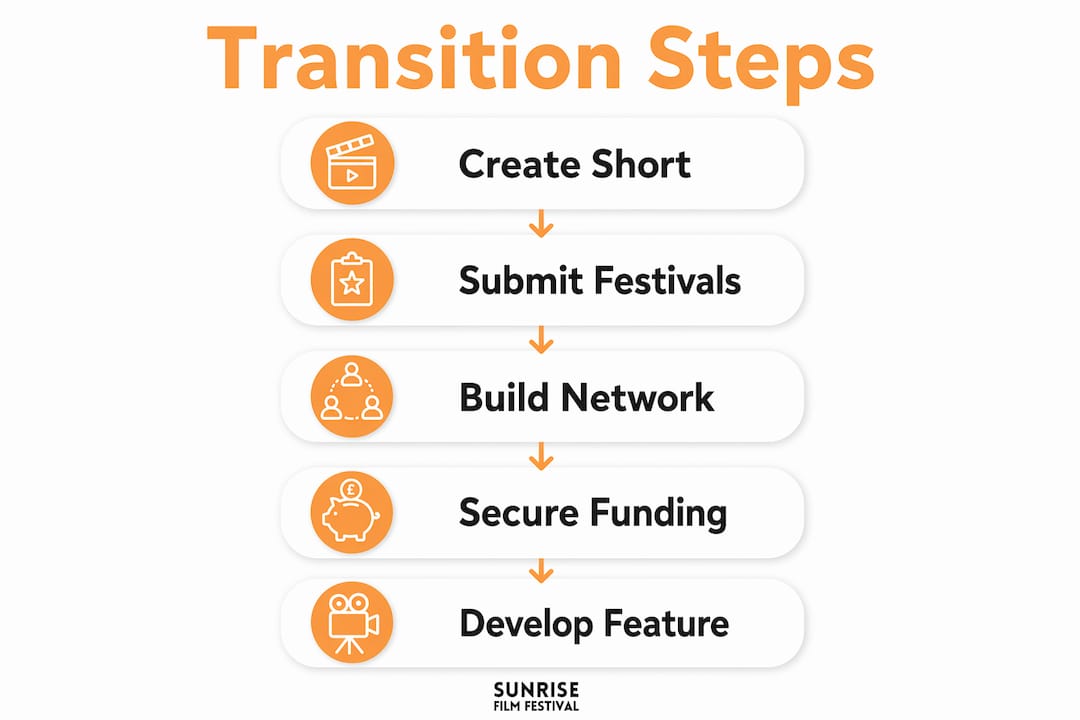
- The festival circuit, online platforms, and networking opportunities help build visibility and credibility that lead to feature opportunities.
Short films are defined as the primary career tool for emerging directors seeking to break into feature filmmaking. The pathway from shorts to features is not accidental. It is built on a clear mechanism: a well-crafted short film demonstrates your visual storytelling ability, attracts industry attention, and creates the professional credibility that feature development demands. Understanding why short films lead to features means understanding how the film industry actually evaluates new talent, and what producers, distributors, and festival programmers look for before committing to a longer project.
How do short films create professional momentum toward features?
Short films function as calling cards, demonstrating filmmaking skills and attracting attention from casting agents, producers, and distributors. That single function explains why so many directors treat their first short as seriously as their first feature. The short is not a rehearsal. It is the audition.
The mechanism works in three connected stages:
-
Visibility through the festival circuit. Festival programmers and sales agents are the first industry gatekeepers a short film reaches. A strong festival run generates buzz, territory sales interest, and the kind of professional legitimacy that a showreel alone cannot provide. Festivals function as ecosystems, not just screening venues, and that distinction matters enormously for career progression.
-
Audience building on digital platforms. Online platforms like YouTube enable filmmakers to build sustained audience engagement that translates into stronger feature development interest. Kane Parsons’ viral short The Backrooms led directly to a feature deal with A24. That outcome was not luck. It was the result of a measurable cultural signal that producers could point to when justifying investment.
-
Professional network development. Every festival screening, every Q&A, and every industry panel is a networking opportunity. Producers and distributors attend festivals specifically to find emerging talent. A short film gives you a concrete reason to be in the room.
Pro Tip: Submit your short to festivals before releasing it publicly online. A world premiere at a recognised festival carries far more industry weight than a film that has already circulated widely on social media.
The importance of short films as career tools is not theoretical. The short film circuit is where careers begin, and the directors who treat it strategically are the ones who progress fastest.
What role do film festivals play in the transition from shorts to features?
Festivals are the engine of the short film career pathway. A good short film strategy begins with festival applications, which serve as initial industry showcases pivotal for gaining buzz and territory sales, particularly across Europe. Timing your submissions carefully is as important as the quality of the film itself.
The strategic elements of a successful festival run include:
- Early and targeted submissions. Apply to festivals that align with your film’s tone, genre, and audience. A horror short belongs at genre-focused festivals before it reaches general programming.
- Festival distributors. In Europe, festival distributor roles sustain a short film’s visibility across multiple events over time. These professionals manage the circuit presence that individual filmmakers rarely have the bandwidth to maintain alone.
- Awards and official selections. Recognition at a qualifying festival carries direct industry value. BIFA qualification, for example, connects filmmakers with industry professionals and elevates a film’s prestige in ways that matter to producers.
- Sales and territory interest. A strong festival run can generate genuine sales conversations. European short film markets in particular have established routes from festival success to distribution deals.
Pro Tip: Research each festival’s programmer before submitting. Understanding what a programmer has selected previously tells you far more about fit than the festival’s official submission guidelines.
| Festival strategy element | Impact on feature pathway |
|---|---|
| Early, targeted submissions | Maximises premiere value and programming fit |
| Festival distributor partnership | Sustains circuit visibility across multiple events |
| Awards and official selections | Builds prestige and attracts producer interest |
| Territory sales conversations | Creates distribution relationships transferable to features |
The benefits of attending film festivals extend well beyond the screening itself. The conversations that happen in festival corridors and industry panels are where feature opportunities genuinely begin.
Should a short film be a proof of concept for a feature?
The short film as proof of concept is one of the most persistent and damaging misconceptions in independent filmmaking. Shorts work best as independent narratives that prove an aesthetic and emotional sensibility, not as trailers for a longer project. Filmmaker and writer Noam Kroll makes this point directly: most feature ideas do not condense neatly into short form, and forcing them to do so weakens both the short and the eventual feature pitch.
“Shorts thrive as standalone artistic forms. Treating them as compressed features produces films that feel incomplete rather than economical.” — Noam Kroll
The narrative economy of a short film is fundamentally different from that of a feature. A short demands a single, crystallised emotional truth. A feature builds that truth across multiple acts, subplots, and character arcs. Compressing a feature story into a short without a conscious form plan weakens both the short and the eventual feature pitch. The result is a film that feels like a summary rather than a complete work.
The films that successfully translate from short to feature, such as Whiplash by Damien Chazelle, are exceptions precisely because the short was crafted as a standalone piece first. The feature emerged from the strength of that standalone work, not from a deliberate prototype strategy. Treating shorts as their own art form leads to stronger films and stronger pitches, because the short proves capability in aesthetic and emotional terms that a treatment or script alone cannot demonstrate.
How do funding schemes support the short to feature progression?
Structured funding formalises the short film as a career development step. Screen Ireland’s Focus Shorts scheme is one of the clearest examples of this approach in practice. Focus Shorts provides up to €70,000 for shorts up to 10 minutes in length, requiring comprehensive production documentation that mirrors feature development requirements.
| Focus Shorts requirement | Feature development equivalent |
|---|---|
| Full script | Feature screenplay |
| Detailed production budget | Feature budget breakdown |
| Production schedule | Feature pre-production timeline |
| Rough cut or treatment | Feature development package |
That parallel is deliberate. Funding schemes like Focus Shorts formalise the short film as a career development step, building professional experience and materials for feature-level work. Filmmakers who complete this process arrive at their feature pitch with a professional package already assembled, which is a significant advantage when approaching investors.
UK film fund mechanisms operate on similar principles. The discipline of preparing a funding application, with its budgets, schedules, and creative statements, builds the professional habits that feature production demands. Filmmakers who skip this stage often struggle with the administrative and financial complexity of a first feature.
What practical steps maximise the short film’s benefits for feature development?
The short film’s value to a feature career depends almost entirely on how deliberately it is produced and distributed. A technically accomplished short with no distribution strategy reaches no one. A modest short with a clear festival and audience plan can open significant doors.
Practical steps that make the difference include:
- Produce efficiently with a small, committed team. Tight short film ideas can be completed rapidly with small budgets. The constraint is a creative advantage, not a limitation. It forces clarity of vision.
- Prioritise visual storytelling over dialogue. Producers and distributors assess a director’s ability to tell stories through images. A short that relies heavily on expository dialogue does not demonstrate the visual thinking that feature work requires.
- Build and sustain audience engagement post-release. Sustained audience feedback in short and web-series content generates cultural signals that influence feature investors. Release your short with a plan for ongoing engagement, not just a one-time upload.
- Document everything professionally. Scripts, budgets, schedules, and production stills are not administrative overhead. They are the foundation of your feature pitch package.
- Connect with festivals that support emerging filmmakers. Festivals like Sunrise Film Festival, which supports emerging filmmakers across overlooked communities in the UK, provide visibility and industry connections that are genuinely difficult to access through other routes.
Pro Tip: After your festival run, release your short on YouTube with a well-written description and targeted tags. A film that continues to find new audiences months after its premiere demonstrates the kind of sustained cultural interest that producers notice.
The short film is not a stepping stone you leave behind. It is the evidence file you carry into every feature pitch meeting.
Key takeaways
Short films lead to features because they prove a filmmaker’s craft, generate industry visibility, and build the professional infrastructure that feature development requires.
| Point | Details |
|---|---|
| Shorts as career calling cards | A well-crafted short attracts producers, distributors, and casting agents more effectively than a CV alone. |
| Festival circuit as career engine | Strategic festival submissions generate buzz, territory sales interest, and professional credibility. |
| Standalone artistic integrity | Shorts crafted as complete works produce stronger films and stronger feature pitches than compressed prototypes. |
| Funding mirrors feature development | Schemes like Screen Ireland’s Focus Shorts build the professional documentation habits that feature production demands. |
| Audience building accelerates investment | Sustained digital audience engagement creates measurable cultural signals that influence feature financing decisions. |
Sunrise Film Festival’s perspective on shorts and the feature pathway
At Sunrise Film Festival, we have watched short films change careers. Not gradually, but decisively. A filmmaker submits a short, it screens in Lowestoft, and within months they are in conversations with producers they had no access to before. That is not a coincidence. It is the festival circuit working exactly as it should.
What we have noticed, though, is that the filmmakers who progress fastest are not necessarily the ones with the biggest budgets or the most technically polished films. They are the ones who treat their short as a complete artistic statement. They are not trying to summarise a feature. They are trying to say one thing, clearly and memorably, in under fifteen minutes. That discipline is what producers respond to.
The mistake we see most often is impatience. A filmmaker makes a short, submits it to three festivals, gets one rejection, and concludes that the festival route does not work. The festival circuit rewards persistence and strategic thinking. It takes time to build the kind of visibility that leads to feature conversations. The filmmakers who stay the course, who keep refining their craft and keep engaging with their audiences, are the ones who eventually make the transition.
Our advice is simple: make the best short film you can, treat it as a finished work of art, and then commit to getting it seen. The feature opportunity follows from that commitment, not from a shortcut.
— Sunrise Film Festival
Showcase your short at Sunrise Film Festival
Sunrise Film Festival is Suffolk’s biggest film festival and a BIFA qualifying event, which means a screening here carries genuine industry weight. We are passionate about giving emerging filmmakers in East Anglia and across the UK a platform that is accessible, inclusive, and connected to the wider industry.

If you are working on a short film and thinking seriously about the transition to features, submitting to Sunrise Film Festival puts your work in front of audiences and industry professionals who care about independent cinema. Check the festival schedule for upcoming submission deadlines and screening dates. You can also read about our BIFA qualification to understand what that recognition means for your film’s profile. We would love to see what you are making.
FAQ
Why do short films lead to feature film opportunities?
Short films demonstrate a director’s visual storytelling ability and generate festival visibility that attracts producers and distributors. Industry guides confirm that shorts function as career calling cards, creating the professional credibility that feature development requires.
Should a short film be a proof of concept for a feature?
No. Shorts work best as standalone narratives with their own artistic integrity. Compressing a feature idea into short form weakens both the short and the eventual feature pitch.
How does the festival circuit help filmmakers transition to features?
Festivals connect filmmakers with programmers, sales agents, and producers who can advance a career. Festival distributors sustain a short film’s circuit presence over time, increasing the chances of industry recognition and territory sales.
What funding is available to support short films as career development?
Screen Ireland’s Focus Shorts scheme offers up to €70,000 for shorts up to 10 minutes, requiring professional documentation that directly prepares filmmakers for feature-level production.
Can a short film on YouTube lead to a feature deal?
Yes. Sustained audience engagement on platforms like YouTube generates cultural signals that influence feature investors. Kane Parsons’ short The Backrooms led directly to a feature deal with A24 after building a significant online audience.