

Following film festival schedules means using official festival sources, dedicated apps, and real-time digital tools to track screenings, reserve tickets, and plan your viewing across both in-person and online events. Festivals like Cannes, SXSW, and the TCM Classic Film Festival publish dynamic schedules that shift right up to the day of screening. Whether you are planning your film festival itinerary weeks in advance or adapting on the fly, the difference between catching a film and missing it entirely often comes down to knowing exactly where to look and when.
Where to find official film festival schedules
The most reliable starting point for any film fan is the festival’s own schedule page. Third-party listings, social media posts, and aggregator sites all lag behind. The Festival de Cannes screenings guide is a strong example of what a properly structured official source looks like: it publishes detailed screening blocks, venue information, and the exact date when ticket reservations open. That level of specificity is what separates a useful schedule from a vague programme listing.
Official schedule pages also carry operational details that you will not find anywhere else. Ticket sales dates, access restrictions, geoblocking notices, and special press windows are all buried in these pages. The Cannes press schedule for 2026, for instance, becomes available on 8 May with reservations opening the same day. Miss that window and you are already behind.
Most major festivals now offer several distinct schedule formats:
- Official website schedule pages: Updated in real time, these are the authoritative source for any film festival lineup. Festivals like Full Frame Documentary Film Festival break programming by cinema and time block across each day, making it straightforward to plan by venue.
- Downloadable digital guides: Useful for offline planning, but always carry a date stamp. The Cleveland International Film Festival’s Digital Film Guide is a good example of a downloadable resource that explicitly advises cross-checking with the live schedule for the latest updates.
- Print programmes: Useful at the venue but outdated the moment they are printed. Treat them as a starting framework, not a final word.
- Festival-specific event platforms: Some festivals use third-party ticketing or event platforms that integrate with the official schedule. Always verify these against the festival’s own site.
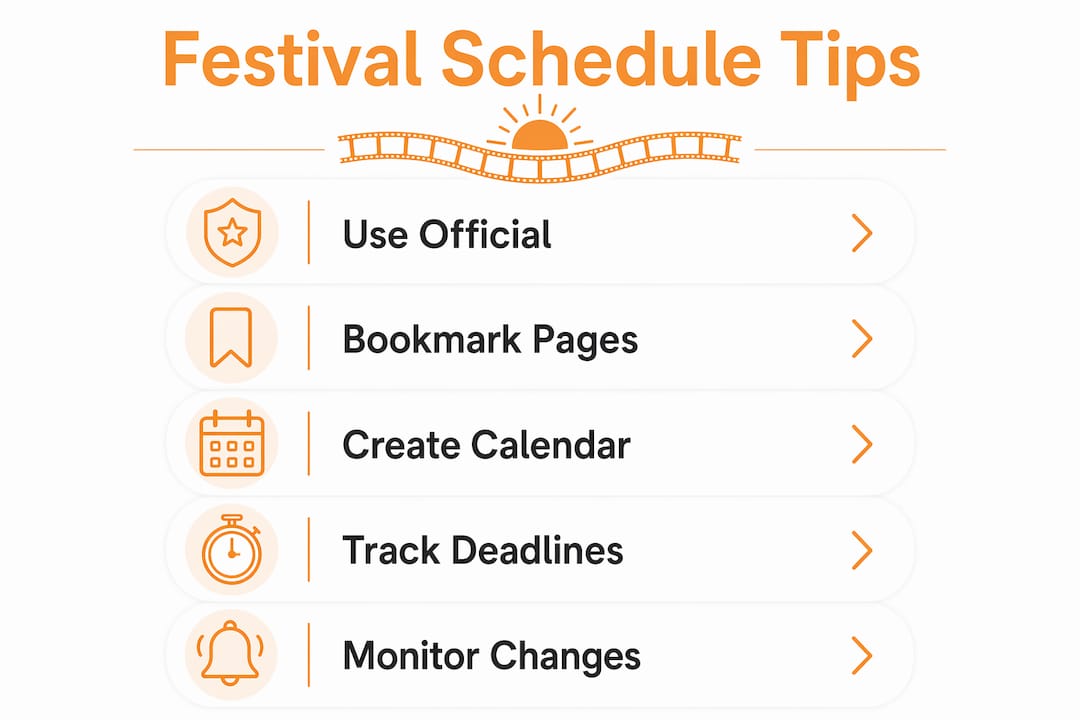
Pro Tip: Bookmark the official schedule page for every festival you plan to attend and check it at least every 48 hours once the programme is live. Do not rely on a single download.
How to build and personalise your festival viewing plan
Once you have located the official schedule, the next step is turning a long list of screenings into a personal plan you can actually use. Many festivals now offer built-in tools to help with exactly this. The Cleveland International Film Festival lets users select films and events directly from the schedule page to purchase tickets and build a personalised viewing list. That kind of integrated tool removes a significant amount of manual cross-referencing.
Here is a practical workflow for building your festival itinerary:
- Download or bookmark the full schedule as soon as it goes live. Note the date stamp on any downloaded version so you know how current it is.
- Identify your priority films first. Go through the entire lineup and mark every film you want to see before worrying about conflicts or timing.
- Check for scheduling conflicts across your priority list and decide which screenings to prioritise. Most festivals offer multiple screening slots for the same film, so a conflict is rarely final.
- Use the festival’s built-in planning tools where available. These often allow you to save films, receive alerts, and see your selections in a single view.
- Download the companion app if the festival offers one. The TCM Classic Film Festival app provides custom scheduling, real-time updates, and alerts for newly announced screenings. This is the single most effective tool for staying current during the festival itself.
- Set calendar reminders for reservation windows, not just screening times. Missing the reservation window is the most common reason film fans lose access to sold-out screenings.
- Separate your online and in-person plans. Online and in-person viewing operate as two distinct scheduling systems, with different access windows, ticket deadlines, and availability. Treat them separately from the start.
Pro Tip: If you are following multiple upcoming film festivals simultaneously, create a shared calendar with colour-coded entries for each festival. This prevents double-booking and makes it easy to see your full film event schedule at a glance.
Why reservation windows and ticket deadlines matter more than you think

Timing is the most underestimated part of following a film festival calendar. Knowing a film is screening is only half the task. Knowing exactly when you need to act to secure your place is what determines whether you actually see it.
SXSW is one of the clearest examples of how reservation windows work in practice. The festival advises badge holders to keep checking the schedule for reservations even after an initial attempt fails, because availability is released dynamically throughout the reservation period. A screening that appears full on Monday may have slots available by Wednesday. Persistent checking is not optional; it is the strategy.
Online festivals add another layer of complexity. The imagineNATIVE Film and Media Arts Festival’s 2026 edition illustrates this precisely: online access runs from 8 June at 10am ET to 14 June at 11:59pm ET, with a last purchase date of 11 June for a guaranteed 72-hour viewing window. Buy after that date and you may not have enough time to watch what you have paid for. That is a hard deadline with real consequences.
Key timing considerations to track for every festival:
- Press schedule release dates: These often precede public schedules by days and signal when the full lineup is about to drop.
- Public ticket sale opening times: Set an alarm, not just a reminder. Popular screenings at major festivals sell out within minutes.
- Online access start and end times: Treat these as strictly as you would a cinema screening time.
- Last purchase dates for guaranteed access: Particularly relevant for festivals with online viewing windows, where buying too late means losing the full access period.
- Geoblocking restrictions: Some festival films are only available in specific territories due to distribution rights. Check this before purchasing online tickets.
How to keep up with schedule changes during the festival
Even the most carefully prepared film festival itinerary will face disruption. Screenings move, venues change, and TBA (To Be Announced) slots fill in at short notice. The festivals that handle this best are the ones that invest in real-time communication tools, and the film fans who cope best are the ones who use them.
The TCM Classic Film Festival app is the benchmark for this kind of reactive planning. It pushes alerts for schedule changes, updates on TBA screenings, and last-minute additions directly to your phone. Relying on a static downloaded guide during an active festival is the equivalent of navigating with a printed map from three years ago.
Practical strategies for staying current mid-festival:
- Check the official app or website every morning before you leave for the venue. Schedules often update overnight.
- Visit the information desk or venue box office on arrival. Staff at these points receive updates before they appear online and can flag changes to your specific screenings.
- Monitor TBA screenings actively. These are not placeholders to ignore. TBA screenings frequently become some of the most sought-after events once details are confirmed, and competition for spots is high.
- Follow the festival’s official social media accounts for urgent announcements, but always verify against the official schedule page before acting.
- Do not delete your downloaded guide mid-festival. It remains useful as a structural reference even when individual details change.
The rise of independent film festivals across the UK has made this kind of real-time schedule management more relevant than ever. Smaller festivals often have leaner communication infrastructure, which means the official website and direct email lists become even more critical sources.
Key takeaways
Following film festival schedules effectively requires combining official sources, dedicated apps, and proactive timing to secure access to the screenings you want.
| Point | Details |
|---|---|
| Use official schedule pages | Always start with the festival’s own site; third-party sources lag behind and miss critical operational details. |
| Act on reservation windows early | Check availability repeatedly after the window opens, as new slots are released dynamically throughout the period. |
| Treat online and in-person separately | Each has distinct deadlines, access windows, and ticket rules that require separate planning. |
| Download the companion app | Festival apps like the TCM Classic Film Festival app provide real-time alerts and TBA updates that static guides cannot match. |
| Monitor TBA screenings | These slots fill with high-demand events; track them via the app and information desks throughout the festival. |
Why flexibility is the real skill in festival planning
I have followed film festival schedules across events ranging from grassroots community screenings to major international programmes, and the single most consistent mistake I see is over-preparation without adaptability. People spend hours building the perfect itinerary, download the guide once, and then treat it as fixed. By the time the festival opens, that guide is already out of date.
The festivals I have found most rewarding are the ones where I committed to checking the live schedule every single morning, sometimes twice. That habit alone has put me in rooms for screenings I never planned to attend and that turned out to be the most memorable of the entire event. TBA slots, in particular, are worth watching. They fill with films that often have complicated distribution situations, which means they may never screen publicly again.
My honest advice: build your initial plan from the official schedule, use the companion app as your primary tool during the festival itself, and leave at least two slots per day unplanned. The best film festival experiences rarely come from the films you booked six weeks in advance. They come from the ones you caught because you were paying attention.
— Comms
Discover Sunrisefilmfestival: Suffolk’s independent cinema home
If you are building your film festival calendar for 2026, Sunrisefilmfestival belongs on it. As Suffolk’s largest film festival and a BIFA qualifying festival, Sunrisefilmfestival runs from 20 to 23 August 2026 in Lowestoft and showcases independent films in one of England’s most underserved communities. The festival is known for its genuinely grassroots atmosphere and its commitment to making cinema accessible to audiences who rarely see themselves reflected on screen.

You can find the full 2026 festival schedule on the official website, including screening times, venue details, and submission information for filmmakers. If you care about independent cinema and want to support a festival that genuinely punches above its weight, this is where to start.
FAQ
How do I follow film festival schedules without missing updates?
Use the festival’s official website as your primary source and download the companion app where available. Check both every 48 hours once the programme is live, and every morning during the festival itself.
What is the best way to track upcoming film festivals across the year?
Build a dedicated calendar with key dates for each festival you follow, including schedule release dates, ticket sale openings, and reservation windows. Official festival websites and mailing lists are the most reliable sources for these milestones.
Why do film festival schedules change so frequently?
Schedules shift due to distribution negotiations, venue availability, and late additions from filmmakers. TBA screenings are particularly common and fill with confirmed details close to or during the festival itself.
How do online film festival viewing windows work?
Online access periods have fixed start and end times set by the festival. The imagineNATIVE festival, for example, guarantees 72-hour access only for tickets purchased before a specific deadline. Buying after that date reduces your available viewing time.
Can I attend a film festival without booking in advance?
Some walk-up tickets are available at most festivals, but popular screenings sell out quickly. For major events like SXSW or Cannes, securing reservations early and checking back repeatedly for newly released slots is the only reliable approach.