
TL;DR:
- Organising a film screening involves planning, licensing, technical preparation, and audience facilitation. Properly managing each step ensures a smooth event that engages the community and avoids legal or technical issues.
Organising a film screening is defined as the structured process of planning, licensing, technically preparing, and facilitating a film event for a public or private audience. The process covers everything from selecting a venue and securing the correct licences to setting up playback equipment and leading post-screening discussions. Whether you are an aspiring filmmaker, a community cinema organiser, or an event coordinator, understanding each phase prevents costly mistakes and creates a genuinely memorable experience. Resources from Film Hub Scotland, licensing bodies such as MPLC, PPL, and PRS, and technical standards like the Digital Cinema Package (DCP) format are central to how film screenings are organised in the UK today.
What are the essential steps in planning a film screening event?
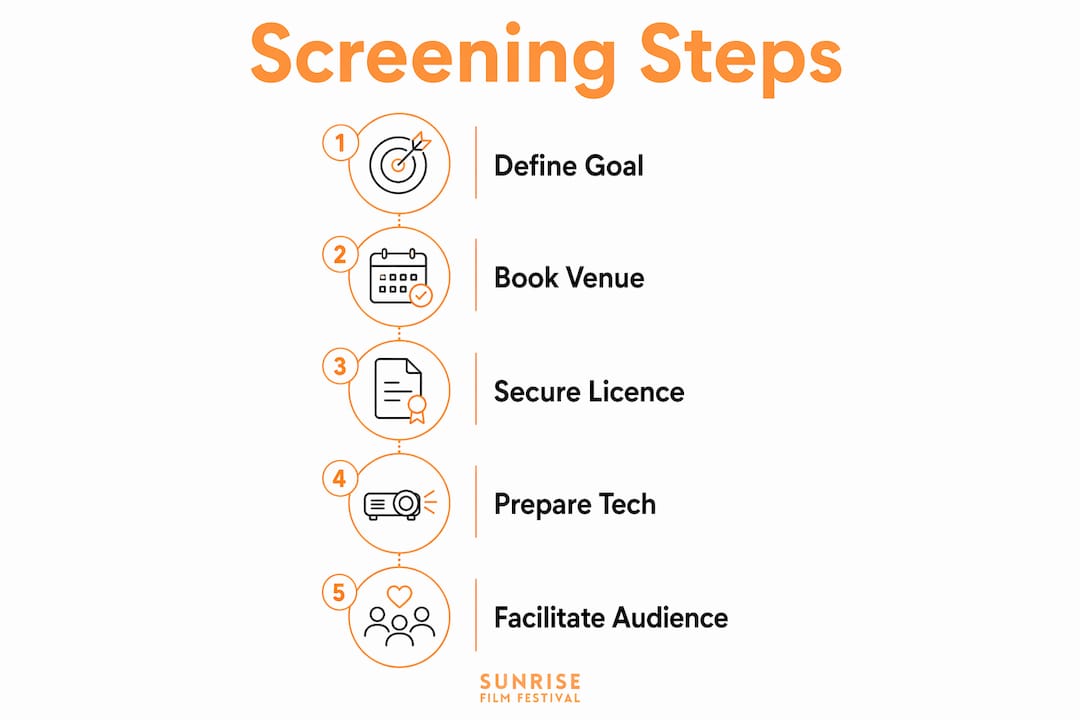
Effective film event planning begins with a clear goal. Before booking a venue or selecting a film, you need to define what success looks like. Are you building community connection, celebrating independent filmmakers, or raising awareness of a social issue? Your goal shapes every decision that follows.
UK community cinema planning typically involves five foundational steps: defining goals, identifying your audience, securing a venue, planning promotion, and building in accessibility. Film Hub Scotland’s planning toolkit guides organisers through each of these phases, including how to manage post-screening discussions and audience energisers. That breadth of guidance reflects how much more a screening involves than simply pressing play.
Follow this sequence when planning your event:
- Define your goal and audience. Decide whether you are targeting a general public audience, a school group, a community organisation, or a specialist film crowd. Audience profiling shapes your choice of film, venue, and tone.
- Select and book your venue. Confirm the venue has the technical facilities you need, including projection equipment, a sound system, and blackout capability. Check capacity against your expected attendance.
- Choose your film and confirm rights. Select a film that fits your goal, then confirm you have the correct screening rights before promoting the event. Rights and licensing are a separate process covered in detail below.
- Plan promotion and accessibility. Promote across local channels, social media, and community networks. Review your accessibility provisions early, including hearing loops, step-free access, and captioned screenings.
- Prepare your facilitation plan. Decide whether you will host a Q&A, a panel discussion, or an open audience conversation after the film. Planning this in advance makes the event feel considered rather than improvised.
Pro Tip: Book your venue at least eight weeks in advance for events with more than 50 attendees. Popular community spaces fill quickly, and early booking gives you time to confirm technical compatibility before committing.
How is the technical side of film screenings managed?
Technical preparation is the single most common source of problems at film screenings. Projectionist Euan Bright contributed expert advice to Film Hub Scotland’s Technical Screening Toolkit, stressing that rehearsing workflows and running through complete show checklists before audience arrival is non-negotiable. A technical failure in front of an audience is avoidable with proper preparation.
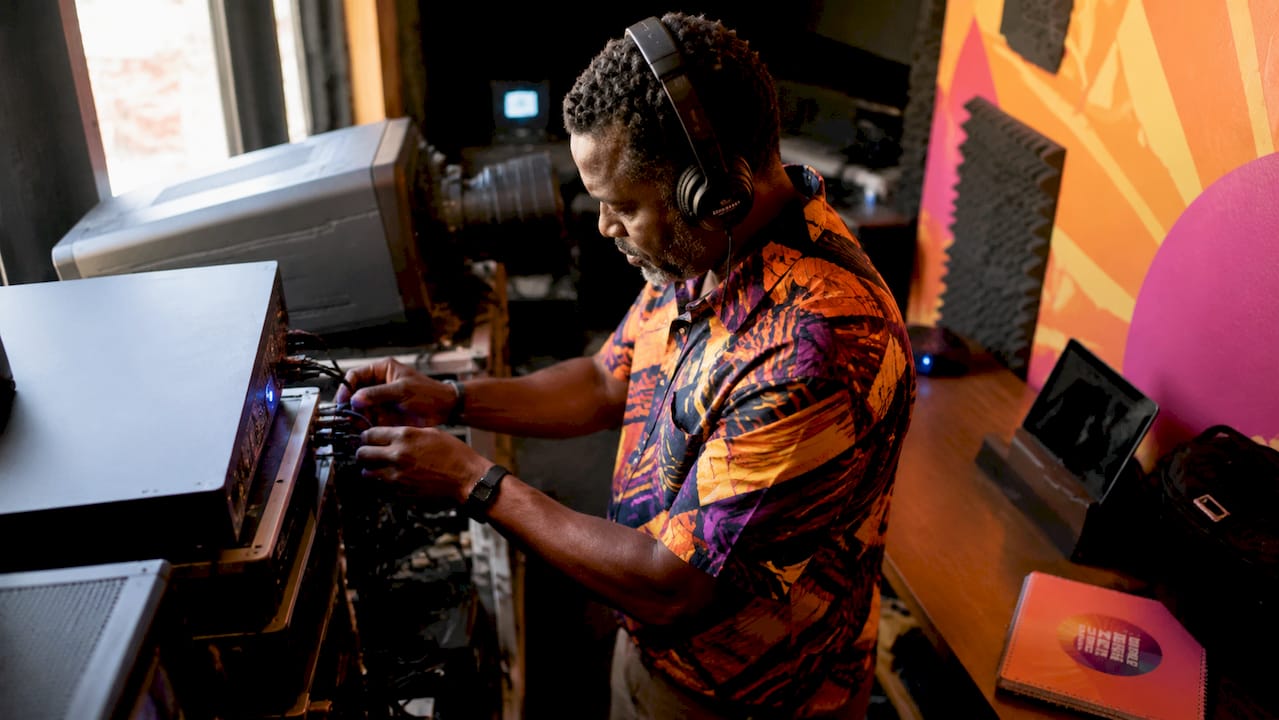
Film screenings use four main playback formats. Each carries different quality levels and technical requirements.
| Format | Typical use case | Key requirement |
|---|---|---|
| DVD | Small community events, low-budget screenings | Standard DVD player, HDMI or composite output |
| Blu-ray | Higher quality community screenings | Blu-ray player, HDMI output, compatible display |
| Video file (MP4, MOV) | Flexible, laptop-based screenings | Reliable media player software, correct codec |
| DCP (Digital Cinema Package) | Festival and theatrical screenings | Dedicated DCP server, KDM for encrypted content |
The DCP format is the professional standard for festival and theatrical exhibition. A Key Delivery Message (KDM) decrypts and authorises DCP playback at a specific location and time. If the KDM contains an error in timing or location, the film will not play. Organisers working with encrypted DCP content must request KDMs with strict attention to lead times and timezone accuracy to prevent invalid authorisation.
Frame rate and audio channel specifications also matter. Standardising these before DCP encoding prevents sync problems that are common at screenings. A film encoded at the wrong frame rate will produce audio that drifts out of alignment with the picture.
Your screening day technical checklist should include: confirming playback format compatibility, testing picture brightness and focus, running a full audio level check across all channels, checking subtitle or caption display if required, and running a complete end-to-end test of the opening sequence. Projectionists advocate a fail-safe approach: rehearse the full workflow, not just individual components.
Pro Tip: Always carry a backup copy of your film in a second format. If your DCP server fails, a high-quality video file on a laptop can save the event.
What licensing is required for legally screening films in the UK?
Licensing is a legal requirement, not an optional formality. Showing a film publicly in the UK without the correct licence exposes you to significant legal risk. The licensing process involves separate bodies for film rights and music rights, and these must be treated as independent tasks from your programming decisions.
The key licences you need to understand are:
- MPLC Umbrella Licence. The Motion Picture Licensing Company (MPLC) covers public screening rights for a wide catalogue of films. Most community venues and organisations showing commercially released films need this licence.
- PPL licence. PPL covers the rights to recorded music. If your screening includes a pre-show playlist, interval music, or any recorded audio, PPL applies.
- PRS for Music licence. PRS covers the underlying musical works and compositions. You need both PPL and PRS if recorded music plays at your event.
- Separate film rights for festival screenings. Clip and festival screening rights are separate from general MPLC coverage. If you are screening a film at a festival or using clips in a programme, you need to clear those rights independently.
Ukactive provides guidance and discounted rates for members on both film and music licences. Even if you are not a ukactive member, their published guidance clarifies the process clearly.
Timing your licence applications is critical. Apply for licences at least four weeks before your event. Some rights holders require longer lead times, particularly for newer releases or international co-productions.
Pro Tip: Create a separate licensing checklist for every event, distinct from your programming and technical checklists. Treating licensing as its own workstream prevents it from being overlooked during busy production periods.
How can organisers create engaging post-screening experiences?
Great film screenings extend beyond logistics. Planned audience facilitation and post-film discussions dramatically increase the impact of a screening and deepen community connection. A film that ends in silence and an empty room misses the most powerful part of the experience.
Film Hub Scotland’s Screen, Share, Discuss guide frames film as a tool for connection and reflection, not just entertainment. That framing changes how you approach the role of host. You are not just a projectionist. You are a facilitator.
Effective facilitation techniques include:
- Open with a brief framing statement. Before the film, give the audience one or two sentences about why this film was chosen and what themes it explores. This primes the conversation without spoiling the viewing.
- Use icebreakers for smaller groups. For audiences under 30 people, a simple opening question such as “What drew you to this screening tonight?” builds warmth before the film begins.
- Prepare three to five discussion questions in advance. Effective post-screening facilitation requires planning tone and handling challenging moments. Having prepared questions prevents awkward silences and keeps conversation moving.
- Acknowledge difficult content directly. If the film deals with trauma, injustice, or sensitive themes, name that briefly before the discussion opens. This signals safety and respect.
- Close with a clear ending. Thank the audience, signpost any further resources or events, and give people a natural moment to transition. Abrupt endings undercut the atmosphere you have built.
For larger screenings, a structured check-in process also supports smooth facilitation. A pass and confirmation code check-in with controlled security can accommodate large audiences efficiently, allowing the facilitation team to focus on the experience rather than logistics.
Pro Tip: Assign a dedicated facilitator who is separate from the technical operator. Splitting these roles means neither person is distracted during the most critical moments of the event.
Key takeaways
Organising a successful film screening requires coordinating planning, licensing, technical preparation, and audience facilitation as four distinct and equally important workstreams.
| Point | Details |
|---|---|
| Plan with a clear goal | Define your audience and purpose before booking a venue or selecting a film. |
| Secure licences early | Apply for MPLC, PPL, and PRS licences at least four weeks before your event. |
| Test all technical elements | Run a full end-to-end technical rehearsal before the audience arrives. |
| Handle KDMs carefully | Request DCP Key Delivery Messages with timezone accuracy and sufficient lead time. |
| Facilitate, do not just screen | Prepare discussion questions and assign a dedicated facilitator to deepen audience engagement. |
Sunrise Film Festival’s perspective on what really makes screenings work
The most common mistake we see from first-time organisers is treating the screening as the finish line. You secure the venue, sort the licence, test the projector, and then assume the job is done. The job is not done. The conversation after the film is where the real work happens, and it is the part most organisers leave entirely to chance.
At Sunrise Film Festival, we have been bringing independent film to Lowestoft and East Anglia since 2021, often in communities where cinema access is genuinely limited. What we have learned is that audiences in these communities do not just want to watch a film. They want to feel that the film was chosen for them, that their response matters, and that the space is welcoming. Technical quality matters, but it is the facilitation that determines whether someone leaves feeling moved or merely entertained.
The licensing piece also catches people out more than any other element. Film rights and music rights involve entirely separate bodies and timelines. We have seen well-planned events stumble because a music licence was applied for too late. Treat licensing as its own project with its own deadlines, not as a box to tick at the end of your planning process.
Our honest advice: build your event backwards from the post-screening conversation. Decide what you want your audience to feel and discuss, then select the film, then sort the logistics. That sequence produces better events every time. If you are thinking about how to choose films at a festival, starting with the conversation you want to create is the most reliable method we know.
— Sunrise Film Festival
Sunrise Film Festival: supporting independent screenings in 2026
Sunrise Film Festival is Suffolk’s largest film festival, and a proud platform for independent filmmakers across East Anglia and beyond. Since 2021, the festival has showcased exceptional, diverse stories in one of England’s most underserved communities, with a genuine commitment to accessibility and creative representation.

For filmmakers and event organisers looking to connect with a festival that understands the full screening process, from technical preparation to community facilitation, the 2026 festival schedule is now available. Sunrise Film Festival offers submission opportunities, screening slots, and a welcoming grassroots environment for emerging and established filmmakers alike. The festival’s free film screenings guide is also a practical resource for organisers planning accessible public events across the UK.
FAQ
What licences do I need to screen a film publicly in the UK?
You need an MPLC Umbrella Licence for film screening rights, plus PPL and PRS licences if recorded music plays at your event. Festival screenings and clip usage require separate rights clearance.
What is a DCP and why does it matter for screenings?
A Digital Cinema Package (DCP) is the professional playback format used in theatrical and festival screenings. It requires a dedicated server and a Key Delivery Message (KDM) to authorise encrypted playback at a specific location and time.
How far in advance should I plan a film screening?
Plan at least eight weeks ahead for events with more than 50 attendees. Licence applications should be submitted at least four weeks before the event date.
How do I facilitate a post-screening discussion effectively?
Prepare three to five discussion questions in advance, use a brief framing statement before the film, and assign a dedicated facilitator who is separate from the technical operator. Film Hub Scotland’s Screen, Share, Discuss guide provides a structured framework for this process.
Do I need separate licences for music and film at a screening?
Yes. Film rights (MPLC) and music rights (PPL and PRS) are governed by separate licensing bodies and involve independent application processes. Both must be secured before your event takes place.