
TL;DR:
- Short films are defined as motion pictures up to 40 minutes long, including credits. They enable artistic risk, cultural expression, and serve as entry points for emerging filmmakers. The format fosters creativity, preserves cultural identity, and advances careers through festival exposure and digital platforms.
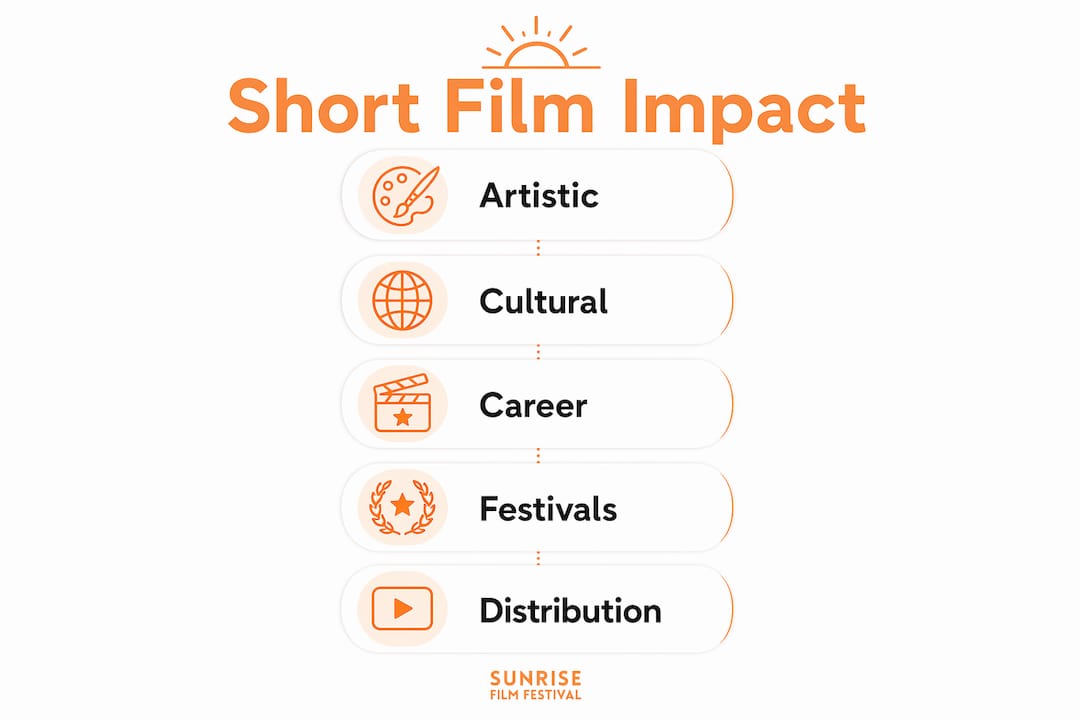
Short films are defined by the Academy of Motion Picture Arts and Sciences as motion pictures up to 40 minutes in length, including credits, with no minimum runtime. That definition captures the form technically, but it says nothing about why short films matter culturally, creatively, or professionally. Short-form cinema, as the industry more broadly calls it, is one of the most flexible and expressive formats available to filmmakers. It enables artistic risk, carries cultural identity, and opens doors for emerging talent that feature films simply cannot. This guide examines the importance of short films across every dimension that counts.
Why short films matter for artistic experimentation
Short films are the format where filmmakers take their boldest creative risks. Without studio budgets to protect or commercial returns to guarantee, a filmmaker working in short-form cinema can pursue unconventional narrative structures, experimental visual styles, and subject matter that would never survive a feature development process.

Artistic freedom in short films is not simply a consolation for limited resources. It is the defining characteristic of the format. A short film can end ambiguously, abandon conventional three-act structure entirely, or centre a single image for five uninterrupted minutes. These choices would be considered too risky in a feature, but in a short they are celebrated.
The practical benefits of this freedom are significant for aspiring filmmakers:
- Narrative experimentation: Shorts allow non-linear storytelling, fragmented timelines, and unreliable narrators without alienating a mainstream audience.
- Visual style: Cinematographers use shorts to test unconventional lighting, aspect ratios, or colour grading approaches before committing them to larger productions.
- Genre subversion: A short can blend horror and comedy, or documentary and fiction, in ways that challenge genre expectations without commercial consequence.
- Voice development: Filmmakers use shorts to identify and refine their personal aesthetic before scaling up.
Short films also serve as proof-of-concept vehicles. A filmmaker who wants to pitch an unconventional feature can produce a short that demonstrates the tone, style, and world of the larger project. This is a recognised industry practice, and it gives emerging voices a credible entry point into professional conversations.
Pro Tip: When making your first short, resist the urge to tell a complete story. Focus on a single mood, image, or character moment. Constraint sharpens craft far more effectively than ambition.
You can find award-winning short film examples that demonstrate exactly this kind of focused, experimental approach.
How short films carry cultural identity and community
Short films are not just artistic objects. They are cultural documents. Research into short films produced in Yogyakarta, Indonesia, found that cultural values are encoded structurally within the films, not just thematically. The use of non-professional actors, minimal dialogue, and restrained resolutions all communicate local identity as powerfully as any explicit narrative content.
This insight matters for filmmakers everywhere. The way you tell a story reflects where you come from. Silence, pacing, and the faces you choose to put on screen are all cultural statements.
The significance of short films in preserving and sharing cultural identity operates on several levels:
- Narrative structure: Local storytelling traditions shape how conflict is introduced and resolved, distinguishing regional cinema from global commercial templates.
- Casting choices: Non-professional actors from specific communities bring authenticity that trained performers cannot replicate.
- Stylistic restraint: Minimal dialogue and slow pacing reflect cultural values around patience, community, and indirect communication.
- Heritage preservation: Short films capture intangible cultural practices, languages, and environments that might otherwise go unrecorded.
Short-form video platforms have expanded this cultural reach considerably. Research into TikTok’s role in cultural heritage dissemination found that platforms reduce barriers to mass sharing while simultaneously risking the dilution of cultural depth through algorithmic effects. The tension is real. A short film that reaches a million viewers on a social platform may sacrifice the very nuance that made it culturally significant.
“Encoding of cultural values in short films is not just thematic but structural and stylistic, shaping storytelling grammar to reflect local identity.”
The implication for filmmakers is clear. Distributing your work widely is valuable, but the platform shapes the experience. A film designed for a festival screen communicates differently when viewed vertically on a phone.
Do short films build careers in the film industry?
Short films are the most accessible entry point into professional filmmaking. Emerging filmmakers gain visibility through shorts without requiring the financial backing that feature productions demand. The format allows a filmmaker to demonstrate craft, vision, and storytelling ability to industry professionals at a fraction of the cost.
The career benefits of short-form cinema are well established across the industry:
- Call cards: A strong short film functions as a professional calling card, demonstrating a filmmaker’s voice to producers, distributors, and commissioners.
- Festival exposure: Screening at recognised festivals places work in front of programmers, agents, and press who actively seek new talent.
- Online platforms: YouTube and platforms like Vimeo host short films that accumulate audiences organically, building a filmmaker’s profile over time.
- Proof of concept: A short can secure development funding or a feature commission by demonstrating that a concept works on screen.
The financial accessibility of shorts is particularly important for filmmakers from underrepresented communities. A feature film requires significant capital and industry connections. A short film requires neither. This democratisation of production is one of the most consequential aspects of the format’s significance.
Pro Tip: Keep your short under 15 minutes if festival submission is your primary goal. Festival runtime standards vary, but programmers consistently favour shorter runtimes when building balanced programmes.
Understanding how festivals support emerging filmmakers gives you a clearer picture of how this career pathway actually functions in practice.
How do film festivals maximise the impact of short films?
Film festivals are the primary ecosystem through which short films reach audiences, build reputations, and generate distribution opportunities. Festival strategy is central to a short film’s lifecycle, from its premiere to any subsequent sales or streaming placement.
The festival circuit works in tiers. A world premiere at a major festival such as Sundance, BAFTA, or the BFI London Film Festival generates press coverage and programmer attention that smaller festivals cannot replicate. From there, a film travels through regional and specialist festivals, building audience and buzz at each stage. This lifecycle is not accidental. It requires deliberate planning.
Runtime is one of the most practical and overlooked factors in festival strategy. Even a 36-minute short may be ineligible at festivals that programme tightly timed blocks. Filmmakers who understand how festival programmes are constructed can make informed decisions about length during the edit.
| Festival type | Primary benefit | Runtime consideration |
|---|---|---|
| Major international festival | Press coverage, industry attention | Strict eligibility rules; shorter is safer |
| BIFA-qualifying festival | Industry recognition, career credibility | Moderate flexibility on runtime |
| Regional and community festival | Audience building, local press | Most flexible; supports longer shorts |
| Genre specialist festival | Targeted audience, niche community | Depends on genre conventions |
| Online and hybrid festival | Broad reach, accessibility | Platform-dependent; algorithm affects visibility |
Film festivals do not just premiere shorts. They build the audience relationships and programmer connections that streaming platforms alone cannot replicate. A film that wins or is shortlisted at a recognised festival carries credibility that follows it into every subsequent distribution conversation.
Understanding submission deadlines for festivals is equally important. Missing an early-bird deadline can cost a filmmaker both money and a competitive submission window.
Are digital platforms changing how short films reach audiences?
Digital platforms have fundamentally changed the distribution landscape for short-form cinema. YouTube, Vimeo, and short-form video platforms have removed the gatekeeping that once made festival circuits the only route to an audience. A filmmaker in Lowestoft can now reach viewers in Lagos or Los Angeles without a distributor.
The benefits are real. Platforms reduce the financial and logistical barriers to distribution, and they allow filmmakers to build direct relationships with audiences. Short-form platforms expand cultural reach in ways that were structurally impossible before digital distribution existed.
The challenges are equally real. Algorithm-driven platforms reward content that performs quickly, which creates pressure to simplify, shorten, and sensationalise. A film that requires patience or cultural context to appreciate is at a structural disadvantage on a platform optimised for immediate engagement. Reliance on algorithmic traffic risks homogenising the very cultural diversity that makes short films significant.
The most effective approach combines both ecosystems. Festival screenings build credibility and critical attention. Digital platforms extend reach and sustain audience engagement over time. Neither replaces the other. Short films are recognised as culturally significant precisely because they coexist alongside feature films rather than competing with them, occupying a distinct creative and cultural space.
Key takeaways
Short films matter because they combine artistic freedom, cultural expression, and career accessibility in a format that no other cinematic form replicates.
| Point | Details |
|---|---|
| Defined by AMPAS rules | Short films run up to 40 minutes including credits, with no minimum length. |
| Artistic experimentation | The format enables creative risk-taking that commercial feature production cannot support. |
| Cultural identity | Narrative structure and stylistic choices encode local values as powerfully as explicit content. |
| Career development | Shorts give emerging filmmakers a credible, affordable route into professional recognition. |
| Festival strategy matters | Runtime, premiere tier, and submission timing all directly affect a short film’s distribution potential. |
Why short films remain essential: a perspective from Sunrise Film Festival
We have screened and celebrated short films at Sunrise Film Festival since 2021, and our conviction about their significance has only deepened. Short films are not a stepping stone to something more important. They are important in their own right.
What we see consistently is that the filmmakers who use shorts most effectively are the ones who treat the format with genuine respect. They are not making a short because they cannot afford a feature. They are making a short because the story they want to tell belongs in this form. That distinction produces entirely different work.
The cultural dimension matters enormously to us as a festival rooted in East Anglia. We screen films that represent communities and perspectives rarely seen on mainstream screens. Short films make that possible. A filmmaker from a community with limited industry access can produce a short that speaks truthfully about their experience, submit it to festivals, and find an audience. That is not a minor achievement. It is a meaningful act of cultural participation.
The tension between digital reach and artistic integrity is one we think about carefully. Platforms offer reach, but festivals offer context. A short film screened in a room with an audience, followed by a conversation with the filmmaker, creates a different kind of connection than the same film watched on a phone. Both matter. Neither is sufficient alone.
Our encouragement to every filmmaker reading this is straightforward. Make the short. Submit it. Show up to the screenings. The short film ecosystem is alive, and it needs your work in it.
— Sunrise Film Festival
Sunrise Film Festival: a home for short films in Suffolk
Sunrise Film Festival is Suffolk’s largest film festival and a BIFA-qualifying festival, which means films screened here carry genuine industry recognition. We are based in Lowestoft, one of the most underserved communities in England, and we are committed to making cinema accessible to audiences who rarely see their stories on screen.

For emerging filmmakers, submitting to Sunrise Film Festival offers direct access to audiences, programmers, and a supportive creative community. Our festival celebrates short films as complete works of art, not warm-up acts. If your short film tells a story that deserves to be seen, we want to see it. Visit our 2026 festival programme to find out more about screenings, submission opportunities, and how to get your work in front of the audiences it deserves.
FAQ
What is the maximum length of a short film?
The Academy of Motion Picture Arts and Sciences defines a short film as any motion picture up to 40 minutes in length, including credits, with no minimum runtime.
Why watch short films rather than features?
Short films offer concentrated storytelling, creative experimentation, and cultural perspectives that feature films rarely explore. They are also a direct route to discovering emerging filmmakers before they reach mainstream recognition.
How do short films help a filmmaker’s career?
Short films function as professional calling cards, proof-of-concept tools, and festival submissions that place emerging filmmakers in front of industry professionals without requiring significant financial investment.
Does runtime affect a short film’s festival chances?
Runtime directly affects festival eligibility and programming. Some major festivals exclude shorts close to the 40-minute maximum, so filmmakers should plan their edit with target festivals in mind.
What is the cultural significance of short films?
Short films encode cultural identity through narrative structure, casting, and stylistic choices, not just subject matter. Research from Yogyakarta demonstrates that the form itself communicates local values as powerfully as the story being told.