

Choosing films at a festival is the process of matching screenings to your taste and viewing goals using programme strands, genre labels, and personal filters. Most festivals publish hundreds of titles across multiple venues, and without a method, decision fatigue sets in fast. The good news is that festivals like IFFR (International Film Festival Rotterdam) and BAFICI (Buenos Aires Festival Internacional de Cine Independiente) have developed tools and frameworks that make the process far more manageable. This guide gives you a practical, step-by-step approach to select films at festivals confidently, whether you are attending for the first time or refining a well-worn routine.
How to choose films at a festival using programme structures
Festival programming is not random. Every major festival organises its lineup into strands and sections, and understanding that structure is the fastest way to filter hundreds of titles down to a workable shortlist.
Programme strands group films by theme, mood, or aesthetic approach rather than simply by genre. At IFFR, for example, strands like Limelight and Cinema Regained signal very different viewing experiences. Limelight spotlights high-profile premieres with broad appeal, while Cinema Regained focuses on restored classics and archival work. Knowing which strand a film belongs to tells you more about the experience it offers than a genre label alone.
Genre labels add a second layer of filtering. Most festivals tag films with categories such as Documentary, Animation, LGBTQIA+, or Crime. These labels let you cross-reference strands with subject matter, so you can find, say, an experimental documentary within a specific thematic strand rather than scrolling through the full programme.
Practical filters narrow the field further. IFFR’s 2026 guide recommends browsing programmes A-Z or per festival day, with filters including subtitling availability, production country, and venue location. These filters are particularly useful when you have accessibility requirements or limited travel time between venues.
Key filters worth using at any festival:
- Programme strand (thematic or mood-based groupings)
- Genre label (Documentary, Animation, Crime, LGBTQIA+, etc.)
- Subtitling (original language with English subtitles, or fully subtitled)
- Production country (useful for regional or international focus)
- Venue and screening time (essential for logistics planning)
Reading the festival’s own descriptions carefully pays off. A well-written programme note will tell you whether a film is challenging, accessible, or somewhere in between. Past selections are equally revealing. If a festival has previously championed slow cinema or genre hybrids, that pattern will likely continue.
What practical strategies reduce overwhelm when selecting films?

The single most effective tactic for managing a large festival lineup is building a shortlist early and committing to it. IFFR recommends limiting deep reading to a final shortlist of 2–4 films per day. That constraint forces prioritisation and prevents the constant reassessment that drains enthusiasm before the festival even begins.
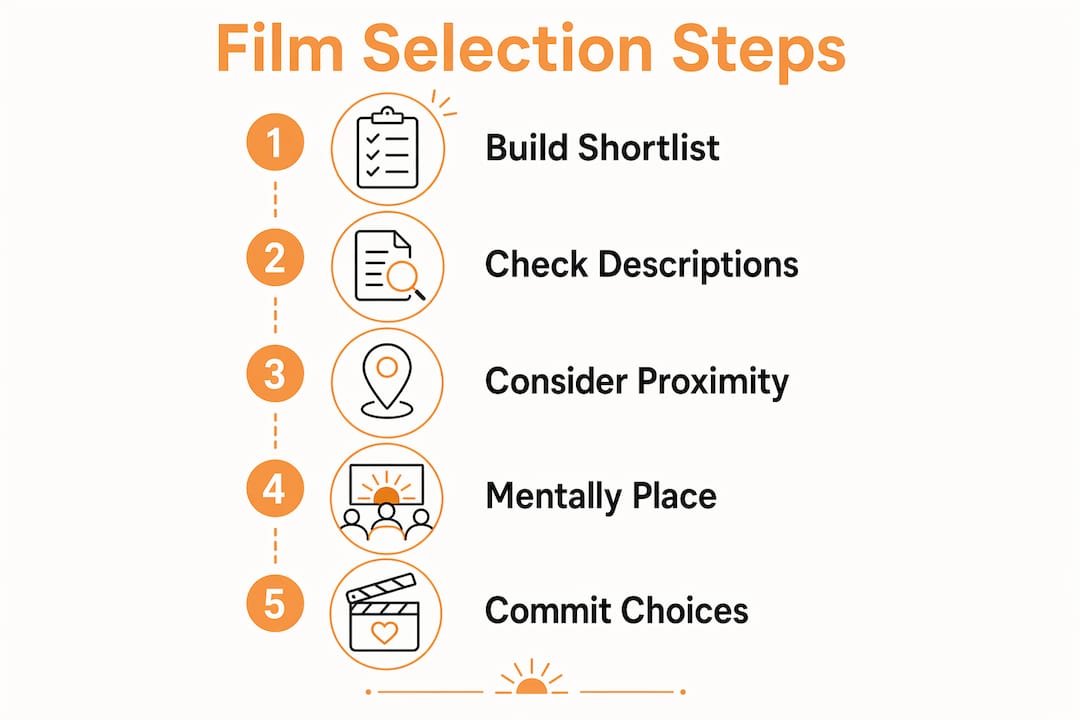
Most festival platforms now offer a digital favourites feature. Creating an account and saving films as you browse means your shortlist is always accessible, even on a phone between screenings. The IFFR platform’s “add favourites” workflow is designed specifically to stabilise preferences and stop you resetting your taste every time you open the programme.
Here is a numbered approach that works reliably:
- Set your mood or focus before browsing. Decide whether you want something challenging, something joyful, or a mix. Pre-defining your desired festival mood accelerates decisions and prevents endless browsing resets.
- Browse by strand first, not by title. Identify two or three strands that match your mood, then explore films within those strands.
- Save everything that interests you using the favourites feature, without judging yet.
- Cut your longlist to 2–4 films per day. Read the programme notes for those films in detail and confirm your choices.
- Check venue proximity and timing. A film that requires a 25-minute cross-city journey after a previous screening is a scheduling risk, not a treat.
- Leave one slot per day unplanned. Spontaneous discoveries are one of the genuine pleasures of festival attendance.
Pro Tip: Save your shortlist to your phone’s home screen or bookmark the festival app. Queues move fast, and fumbling for your programme in the moment costs you the best seats.
Planning venue proximity and preserving schedule space for your best-fit films avoids the risk of chasing perfect picks and missing key screenings entirely. Logistics are not glamorous, but they determine whether you actually see the films you chose.
How does the conventional-to-experimental framework help you pick films?
The festival matrix is a viewing tool that plots films along two axes: conventional versus experimental style, and conclusive versus complex narrative. Vox Magazine’s True/False matrix applies this framework to help viewers select a balanced lineup rather than accidentally booking five films with identical tones.
The axes work like this. The horizontal axis runs from conventional (familiar narrative structures, clear cause and effect) to experimental (fragmented, non-linear, or formally inventive). The vertical axis runs from conclusive (clear resolution, emotional closure) to complex (ambiguous, open-ended, or intellectually demanding). Every film sits somewhere on this grid.
| Quadrant | Style | What to Expect |
|---|---|---|
| Conventional + Conclusive | Familiar structure, clear ending | Accessible, emotionally satisfying |
| Conventional + Complex | Familiar structure, ambiguous ending | Thought-provoking but approachable |
| Experimental + Conclusive | Inventive form, clear resolution | Formally bold but emotionally grounded |
| Experimental + Complex | Inventive form, open ending | Challenging, demands active engagement |
Plotting your shortlist on this grid reveals bias quickly. If all four of your daily picks land in the Experimental + Complex quadrant, you are likely to feel exhausted by the end of the day. Balancing your schedule along these axes prevents monotony and sustains engagement across multiple days.
Pro Tip: After building your shortlist, mentally place each film on the matrix. Aim for at least one film from each half of the horizontal axis per day. The contrast makes both films more memorable.
Viewing films along taste dimensions rather than just titles produces a more emotionally rewarding experience. The matrix is not a rigid rule. It is a prompt to check whether your choices are genuinely varied or just superficially different.
How to research festivals and align film choices with your interests
Not every festival suits every viewer, and attending the wrong type wastes both time and money. Tools for Film classifies festivals into tiers, and those tiers describe very different audience experiences.
Tier A festivals such as Cannes, Sundance, and the BFI London Film Festival carry acceptance rates of 1–4% and are heavily industry-focused. The atmosphere prioritises press, buyers, and industry networking. Tier B festivals specialise by genre or region, offering deeper programming in specific areas such as horror, documentary, or East Asian cinema. Tier C festivals are mid-tier and audience-oriented, often providing the most relaxed and community-centred viewing experience.
Choosing the right tier matters for how you select films at festivals within that context. At a Tier A event, the buzz around certain titles is real and worth following. At a Tier B genre festival, the programming itself is the guide. At a Tier C community festival like Sunrisefilmfestival, the curation reflects local values and the films are chosen to resonate with a specific audience.
Before attending any festival, check these things:
- The festival’s stated mission. Does it prioritise debut features, international cinema, or community stories?
- Past lineups. A festival that has consistently championed slow cinema or social realism will continue to do so.
- Premiere requirements. Some festivals only screen UK or world premieres, which shapes the entire selection.
- Audience focus. Is the festival aimed at industry professionals, general audiences, or a specific community?
Reading festival descriptions and past selections is critical for deciding whether the programming aligns with your viewing preferences. This research takes 20 minutes and saves hours of disappointment.
What are the common mistakes to avoid when choosing festival films?
The most common mistake is trying to see too many films. Festivals with 300+ titles create a pressure to maximise every hour. Time Out’s BAFICI 2026 guide notes that shifting focus from quantity to a curated experience by mood or section preserves enthusiasm and memory of the festival. Seeing eight films in a day is possible. Remembering and appreciating all eight is not.
Other pitfalls are equally avoidable:
- Focusing only on one type of film. Booking five documentaries in a row, however good, produces diminishing returns. Variety sustains attention.
- Ignoring venue distances. A 15-minute walk between venues sounds manageable until you factor in queue time, seating, and the fact that the previous film ran long.
- Failing to update your shortlist. New reviews, word-of-mouth recommendations, and sold-out screenings change the picture daily. Check your shortlist each morning.
- Skipping unknown titles entirely. Festivals exist to surface films that would not otherwise reach you. Protecting at least one slot per day for an unfamiliar title is the whole point.
“The best festival experiences come from a mix of intention and openness. Plan your anchors, then leave room for the unexpected.”
Decision fatigue is real, and managing decision fatigue is as much a part of festival planning as choosing the films themselves. Build your shortlist before you arrive, protect your key screenings, and give yourself permission to stop browsing once you have a solid plan.
Key takeaways
Choosing films at a festival rewards preparation: use programme strands, a viewing matrix, and a daily shortlist of 2–4 films to build a varied, satisfying schedule.
| Point | Details |
|---|---|
| Use programme strands first | Filter by strand and mood before browsing individual titles to cut overwhelm. |
| Build a digital shortlist early | Save favourites on the festival platform to stabilise your choices before the event. |
| Apply the viewing matrix | Plot films on the conventional-to-experimental axis to avoid a monotonous schedule. |
| Research the festival tier | Match the festival type to your viewing goals before committing to attendance. |
| Leave one slot unplanned daily | Spontaneous discoveries are a core part of the festival experience, not an afterthought. |
Why mindful selection makes the difference
I have watched people arrive at festivals with a printed list of 30 films and leave feeling vaguely disappointed, despite seeing excellent work. The problem is never the films. It is the approach. When you treat a festival like a completionist exercise, you stop experiencing the films and start processing them.
The most satisfying festival experiences I have seen come from people who chose deliberately and stayed curious. They picked four or five films they genuinely wanted to see, left space for recommendations from other audience members, and spent time in the foyer talking about what they had just watched. That conversation is part of the experience. You cannot have it if you are already sprinting to the next screen.
The 2026 Sunrisefilmfestival programme is a good example of curation that rewards this kind of attention. The films are chosen to reflect real stories from communities that rarely see themselves on screen. That context changes how you watch. Knowing why a film was selected, and by whom, adds a layer of meaning that no amount of browsing can replicate.
My honest recommendation: read the programme notes, not just the titles. The notes tell you what the programmers saw in a film. That perspective is worth more than any star rating.
— Comms
Plan your Sunrisefilmfestival viewing schedule
Sunrisefilmfestival is Suffolk’s biggest film festival and has been bringing independent cinema to East Anglia since 2021. The programme is built around curated strands and genre-labelled films, designed to help you find the right screening without scrolling for hours.

The festival schedule gives you a full timetable with filtering options, so you can plan by day, venue, or strand. The 2026 screening films page lets you browse the full selection with genre labels and programme notes attached. Build your shortlist there, save your favourites, and arrive ready to watch rather than decide. Sunrisefilmfestival is a BIFA-qualifying festival, and every film in the programme has been chosen with care for the audience and the community it serves.
FAQ
What does “programme strand” mean at a film festival?
A programme strand is a themed grouping of films curated around a shared mood, style, or subject. Strands help attendees filter large lineups by experience type rather than genre alone.
How many films should i plan to see each day at a festival?
IFFR recommends a shortlist of 2–4 films per day as the optimal range. This preserves attention and allows genuine engagement with each screening.
How do i pick festival films i have never heard of?
Read the programme notes and check which strand the film belongs to. Festivals select unknown titles for specific reasons, and the notes explain what the programmers found compelling.
What is the difference between a tier a and tier c festival for audiences?
Tier A festivals like Cannes are industry-focused with high competition for tickets. Tier C festivals are audience-oriented and community-centred, offering a more relaxed and accessible viewing experience.
How do i avoid missing screenings due to scheduling conflicts?
Check venue distances before confirming your schedule and build in travel time between screenings. Time Out advises managing venues and schedule to allow spontaneity and reduce the risk of missed key screenings.