
TL;DR:
- Film festivals are crucial for emerging filmmakers to gain exposure, industry connections, and career momentum.
- Choosing the right festival tier helps filmmakers build credibility, audience engagement, and networking opportunities.
Film festivals are the primary launchpad for emerging filmmakers seeking professional exposure, industry connections, and career momentum. The term “emerging filmmaker” refers to any director, writer, or producer without a major studio credit who is building their reputation through independent work. Understanding how festivals support emerging filmmakers means recognising them not just as screening events, but as curated ecosystems where careers genuinely begin. Festivals like Sundance, Cannes, and the BFI London Film Festival have launched some of the most significant voices in independent cinema, and grassroots festivals across the UK are doing the same work at a community level.
How film festivals support emerging filmmakers across every tier

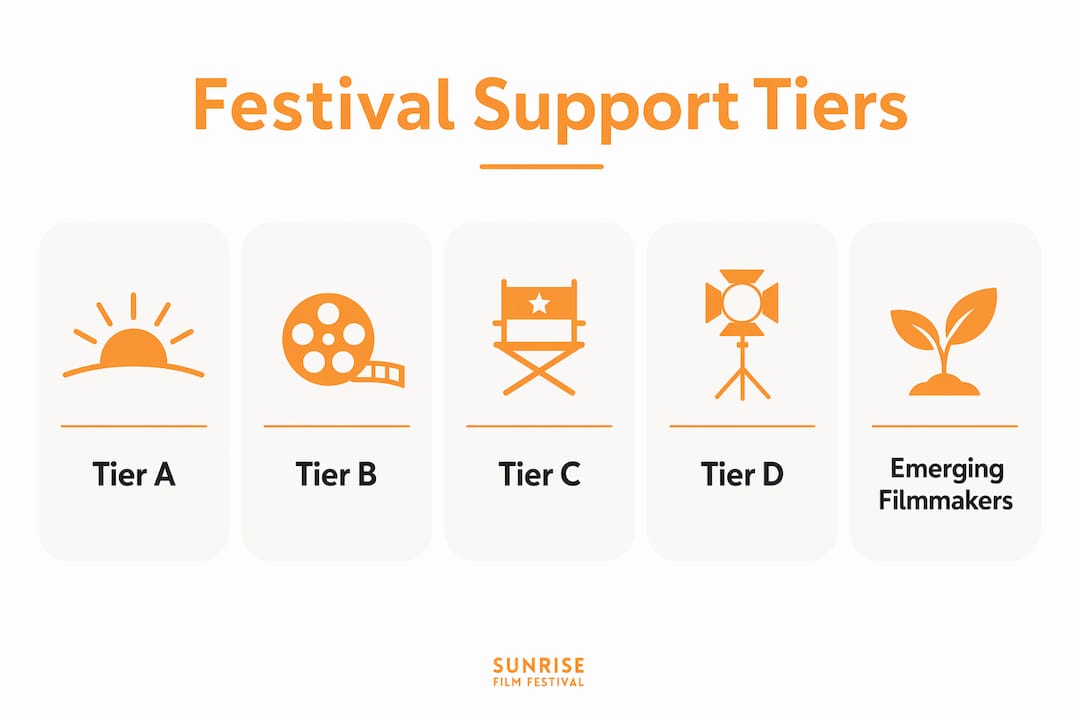
Film festivals operate across a clear hierarchy of tiers, and each tier serves a distinct purpose for emerging filmmakers. Knowing which tier suits your film is one of the most practical decisions you can make as an independent filmmaker.
Tier A festivals include Sundance, Cannes, and the Berlin International Film Festival. Acceptance rates at Tier A festivals sit at just 1–4%, making them highly competitive platforms. A selection at this level signals immediate industry credibility and opens doors to major acquisition conversations with distributors and sales agents.
Tier B and C festivals cover genre-specific, regional, and thematic events. These include festivals focused on horror, documentary, LGBTQ+ cinema, and short film. They offer a more realistic path to acceptance and deliver targeted audiences who are genuinely invested in the work. For many emerging filmmakers, a strong run at Tier B and C festivals builds the momentum needed to approach Tier A events with a stronger track record.
Tier D festivals function as entry points. They are smaller, often local events where filmmakers gain their first official selection credits, practise Q&A sessions, and build confidence presenting their work publicly. Sunrise Film Festival sits within this accessible tier, offering emerging filmmakers in East Anglia a genuine platform to screen work in front of engaged audiences.
| Festival tier | Examples | Primary benefit for emerging filmmakers |
|---|---|---|
| Tier A | Sundance, Cannes, Berlin | Major acquisition opportunities, global press |
| Tier B | SXSW, Tribeca, Edinburgh | Genre and regional exposure, industry networking |
| Tier C | Raindance, genre-specific festivals | Niche audiences, targeted distributor interest |
| Tier D | Sunrise Film Festival, micro festivals | First credits, community, accessible entry point |
Pro Tip: Submit to festivals where your film genuinely fits the programme. A short documentary about community life in Suffolk will find a warmer reception at a regional or socially focused festival than at a genre horror event.
Why film communities support filmmakers through festivals
The networking function of film festivals is as significant as the screenings themselves. Emerging filmmakers gain not only exposure but a sense of community at festivals, with peer recognition and lasting creative relationships forming there regularly. This community dimension is what sustains careers long after a single film has screened.
Festivals create concentrated moments where filmmakers, programmers, critics, and industry professionals share the same physical space. That proximity produces conversations that simply do not happen online. A filmmaker attending a Q&A after their screening might speak directly with a distributor, a funding body representative, or a fellow director whose next project becomes a collaboration.
The educational value of festivals is equally significant. Q&A sessions provide real-time audience feedback that helps filmmakers refine their storytelling in ways that online commentary rarely achieves. Hearing how a live audience responds to a specific scene or narrative choice gives filmmakers concrete, immediate information about what is working.
Key ways festivals build professional community for emerging filmmakers:
- Direct access to festival programmers who can advise on future submissions and creative direction
- Peer introductions that lead to co-productions, crew relationships, and shared resources
- Mentorship from established filmmakers who attend panels, masterclasses, and industry events
- Press and critic engagement that generates written coverage and builds a filmmaker’s public profile
- Feedback from diverse audiences that reflects how a film lands beyond the filmmaker’s own circle
Pro Tip: Before attending any festival, identify three specific people you want to meet, whether that is a programmer, a distributor, or a fellow filmmaker. Targeted conversations produce far better results than general socialising.
How festivals open pathways to funding, distribution, and career advancement
Film festivals are not simply cultural events. They are commercial and professional infrastructure for the independent film industry. The pathway from festival screening to distribution deal or funded next project is well established, and understanding it helps emerging filmmakers approach festivals with clear goals.
-
Build a festival run before approaching distributors. Receiving 3–5 genre-specific festival acceptances and attending 1–2 of those events creates roughly a 60–70% chance of initiating at least one distributor conversation. That figure underlines why a targeted festival run matters more than a single prestigious rejection.
-
Use awards as marketing assets. Award recognition acts as a quality signal for distributors, improving a film’s marketing potential and strengthening a filmmaker’s negotiating position. Jury prizes and audience awards translate directly into producer interest and financing conversations for future projects.
-
Engage with brand-supported initiatives. Programmes like AT&T Untold Stories, which operates through Tribeca Festival, demonstrate how corporate partnerships amplify financial support. AT&T Untold Stories increased its prize money by $200,000 in 2026, with grants including production support, industry connectivity, and guaranteed premieres. These initiatives exist specifically to fund emerging voices.
-
Treat festival buzz as a sales tool. Buyers and funders attend festivals actively looking for projects. A well-attended screening with visible audience enthusiasm creates a social proof effect that no press release can replicate.
“Festival selection serves as a credibility shortcut for independent filmmakers, offering an expert-vetted stamp that is often more persuasive than marketing budgets or celebrity attachments.” — How Film Festivals Help Independent Filmmakers Succeed
Festival programmers increasingly build long-term pathways for emerging talent rather than focusing solely on immediate acquisition. That shift means festivals are investing in filmmakers as careers, not just in films as products.
Strategies for emerging filmmakers to maximise festival participation
Strategic participation separates filmmakers who build careers through festivals from those who spend money without results. Filmmakers frequently misuse festival attendance by chasing Tier A selections or attending without clear objectives, which wastes limited budgets and time.
The most effective approach combines realistic submission targeting with deliberate attendance planning. Submitting to festivals where your film fits the programme, the audience, and the tier is the foundation of a productive festival strategy. The benefits of attending film festivals compound significantly when filmmakers arrive with defined goals rather than a general hope of being discovered.
Practical strategies for maximising your festival experience:
- Match your film to the festival’s identity. A short film about working-class life in East Anglia belongs at a community-focused or regional festival, not at a genre horror event.
- Set attendance objectives before you travel. Define whether your priority is press coverage, distributor meetings, or peer networking, then build your schedule around those goals.
- Prepare for Q&A sessions. Audiences ask revealing questions. Use those sessions to practise articulating your creative vision clearly and concisely.
- Follow up within 48 hours. Connections made at festivals fade quickly without follow-up. Send a brief, specific message referencing your conversation while the context is fresh.
- Document your festival run. Collect laurels, reviews, and audience responses. This material becomes the marketing foundation for your next submission cycle.
| Common mistake | Better approach |
|---|---|
| Submitting only to Tier A festivals | Build a tiered submission strategy across A, B, C, and D |
| Attending without clear goals | Define 3 specific objectives before arrival |
| Ignoring smaller regional festivals | Use regional festivals to build credits and community |
| Skipping Q&A sessions | Treat every Q&A as a feedback and networking opportunity |
Understanding independent film festivals in the UK as a growing and increasingly competitive circuit helps emerging filmmakers see the full range of opportunities available beyond the internationally recognised names.
Key takeaways
Film festivals support emerging filmmakers most effectively when filmmakers approach them strategically, targeting the right tiers, attending with clear objectives, and using every screening as a professional development opportunity.
| Point | Details |
|---|---|
| Festival tiers serve distinct purposes | Match your submission to the tier that fits your film’s scale and audience. |
| Community is a career asset | Peer relationships and mentor connections formed at festivals sustain long-term careers. |
| Awards signal quality to distributors | Jury and audience prizes improve marketing potential and financing prospects for future projects. |
| Strategic attendance outperforms passive attendance | Define goals before arrival to convert festival time into distributor conversations and press coverage. |
| Grassroots festivals provide genuine entry points | Regional and community festivals offer accessible first credits and engaged local audiences. |
Sunrise Film Festival’s perspective on what festivals really do for filmmakers
The conversation about how festivals support emerging filmmakers often focuses on Sundance and Cannes. Those festivals matter enormously, but they represent a tiny fraction of the ecosystem. What we have seen at Sunrise Film Festival since 2021 tells a different story, one that is just as important.
Filmmakers who screen with us in Lowestoft are not chasing acquisition deals. They are building something more durable: the confidence to call themselves filmmakers, the experience of presenting their work to a live audience, and the connections that lead to their next project. Those outcomes are not consolation prizes. They are the actual foundation of a sustainable career.
The most underestimated benefit of festivals is the feedback loop. A filmmaker who sits in a room and watches an audience respond to their work in real time learns more in ninety minutes than they might from months of online commentary. That direct, honest engagement is what grassroots festivals like ours are built to provide.
We also believe that festivals in overlooked communities carry a specific responsibility. Lowestoft is one of the most deprived areas in England. Bringing high-quality independent cinema here, and giving local and national filmmakers a platform to screen their work in this community, is a cultural act as much as an industry one. The filmmakers who choose to screen with us are making a statement about who cinema is for.
Our advice to any emerging filmmaker reading this: do not skip the smaller festivals. The relationships you build, the feedback you receive, and the credits you earn at accessible, community-focused events are what make your Tier A submission credible when the time comes.
— Sunrise Film Festival
Sunrise Film Festival: a platform built for emerging talent
Sunrise Film Festival is Suffolk’s largest film festival and a BIFA-qualifying event, which means a selection with us carries genuine industry recognition. Since 2021, we have been committed to showcasing independent film in East Anglia and creating a genuinely inclusive space for filmmakers at every stage of their career.

Whether you are submitting your first short film or building on an established festival run, Sunrise Film Festival offers a warm, grassroots environment where your work will be seen by real audiences and engaged industry guests. Check the festival schedule for upcoming screening dates and submission windows. Our BIFA qualification means that a selection here supports your film’s wider industry journey. We are proud to be the kind of festival that filmmakers return to, not just because of what we offer, but because of the community we have built together.
FAQ
What do film festivals offer emerging filmmakers?
Film festivals offer emerging filmmakers curated exposure, direct audience feedback, industry networking, and credibility through official selection. These benefits combine to build the professional foundation needed for a sustainable career in independent cinema.
How competitive are film festival submissions?
Acceptance rates at Tier A festivals like Sundance, Cannes, and Berlin sit at just 1–4%. Regional and grassroots festivals offer significantly higher acceptance rates and are often a more productive starting point for filmmakers building their first credits.
Can a film festival help secure a distribution deal?
Receiving 3–5 genre-specific festival acceptances and attending 1–2 of those events creates a strong basis for initiating distributor conversations. Award recognition further strengthens a film’s negotiating position with buyers and sales agents.
Why should emerging filmmakers attend smaller regional festivals?
Smaller regional festivals provide accessible entry points, engaged local audiences, and genuine community connections. They also offer the Q&A experience and first official selection credits that make future submissions to larger festivals more credible.
What is the best way to meet filmmakers at festivals?
Attending panels, Q&A sessions, and networking events with specific goals produces the most productive connections. Identifying two or three people you want to meet before the festival begins, then following up within 48 hours, converts brief conversations into lasting professional relationships.